Ketchikan has three claims to fame:
- Salmon Capital of the USA.
- From mid-May to mid-September, one can find all five species of North American Pacific salmo filling Ketchikan Creek, fighting their way upstream to spawn.
- First City in Alaska
- Lots of qualifiers here since the natives have lived here for thousands of years)
- Rain Capital of the USA
- Ketchikan gets 14 feet of rain per year. In 2021, they got 12″ in one day and it caused a landslide.
- Cisterns are popular. That makes sense.
- Umbrellas are Alaskan tumbleweed.
If people are not Alaska natives, they are always considered settlers to the land.
People learn from the indigenous people. Devil’s club is used as a salve and can be made into a tea. I bought some salve for my sore muscles. I hope that it works.
Indigenous Diapers
The Alaska natives have used white tooth sphagnum moss found in bogs as a natural, biodegradable diaper for centuries.
The moss holds 20 to 40 times its weight in water, prevents rashes due to its mild acidity, and provides natural antibacterial protection. It acts like a natural sponge, absorbing significantly more moisture than plain cotton.
The moss is slightly acidic and possesses natural defensive properties that fight bacteria, helping to prevent and heal diaper rash. The dense, porous structure of the moss traps odors naturally without the need for synthetic chemicals.
Moss Bags
Many North American Indigenous cultures utilized the moss in traditional baby carriers known as moss bags.
The moss was meticulously gathered from bogs, cleaned of debris, and hung out in the sun to dry. The drying process allowed any insects to escape or drop out. The soft, dry moss was stuffed into a cloth or buckskin bag. The baby was nestled into the moss bag, keeping them warm, insulated, and dry. When soiled, the moss could be easily removed and directly composted, acting as a fully organic disposable diaper.
Cedar is used to carve totems because they are very durable. Prior to that, the native Alaskans broke off curved branches to use for housing. They were sad when loggers cut off the trees and left the stumps. They use the whole tree. They looked like tombstones to them.
The Prince of Wales Island is the largest island in North America. The mountains are steep. They often don’t end with a beach. They continue down into the water.
The longest road in Ketchikan is 33 miles long. We arrive at the terminus where there is a sign that says END because it is.
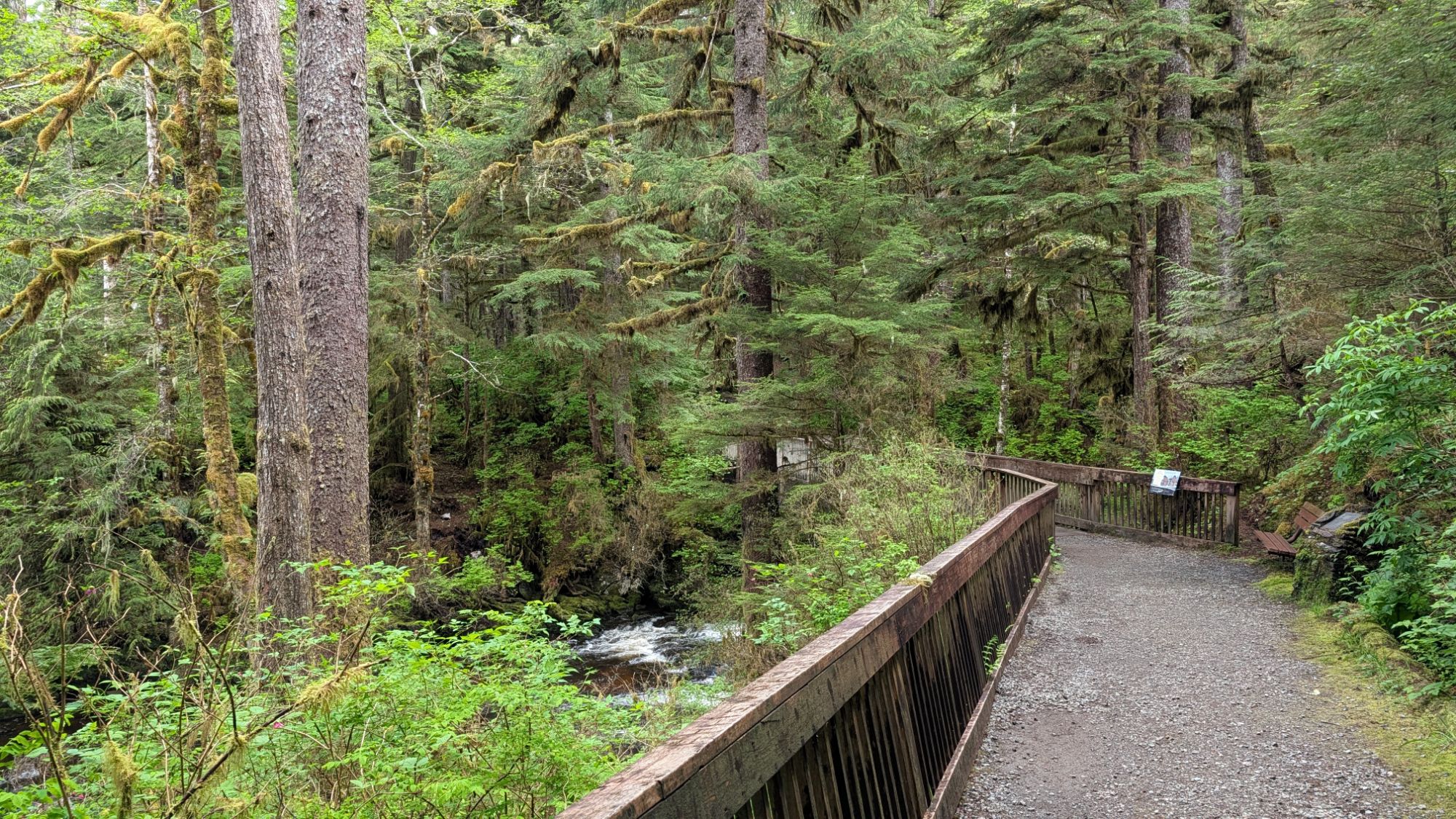
Here we enter the Tongass National Forest.


Because skunk cabbage generates its own heat (thermogenesis) to melt snow, it is often the first green plant available when bears leave hibernation. We were very aware that we might encounter a bear in this area since it is time for the bears to emerge.


A group of crows is called a murder. A group of ravens is called a massacre. A raven has a more prominent beak than a crow and has a curve.


The population of Ketchikan is 8,000, but over a million cruise ship passengers pass through the area each year.
Today there were seven ships with 15,672 passengers. The first ship arrived at 6am and the last ship left at 8pm. There is sure to be a collective sigh of relief by the residents when we leave.

Leave a Reply