The annual Carnival is a major cultural event, famous for its calypso and soca music. The steelpan, limbo, and various musical styles originated here.
At the dock, we were treated to colorful dancers and lively music.


Trinidad and Tobago cover 300 square miles with a population of 60,000. The islands are very mountainous. The dry season is January to June and the rainy season is July to December.
Trinidad and Tobago are the most southern of the Caribbean Islands. The national capital of the combined islands is Port of Spain. Scarborough is the capital of Tobago. Trinidad lies only seven miles to the north of Venezuela.
Scarlet Ibis is the national bird, and Chaconia is the national flower. The Independence committee designed the coat of arms. It features the scarlet ibis (native to Trinidad), the cocrico (native to Tobago), and the hummingbird. The shield bears the steelpan drum which is the national instrument of Trinidad and Tobago.
Our guide used the term “son of the soil” when talking about famous people. In Trinidad and Tobago, “son of the soil” is an honorific term describing someone with deep, often generational, roots in the country, demonstrating unwavering love, service, or dedication to its land and culture. It is applied to distinguished citizens who have contributed significantly to the nation’s identity.
Notable sports figures are Claude Noel, boxing, and Dwight York, soccer, but cricket is the major sport.
However, currently the President, Prime Minister, and Opposition leader are females that run the country. Perhaps they will be daughters of the soil someday.
Our guide felt that local government is unnecessary and just spends their time trying to decide from which pocket they will take his money.
Trinidad and Tobago features a diverse range of sand colors due to varied geology, with Trinidad’s southern-influenced, darker sand and more rugged beaches contrasting with Tobago’s lighter, coral-based shores. Beaches have pink, black, white, and tan sand reflecting the erosion of volcanic rock, minerals, and coral. Green beaches are the best. The Atlantic side is too rough and has a steep drop off.
They speak English but have different dialects that they use when they don’t want you to know what they are talking about.

Tobago has no factories. Trinidad has more industry. Everything is imported especially Carib beer which is made in Trinidad. Tobago has more produce and meat.
Sheep farmers don’t need to shear. Their wool drops off during the dry season. In order to tell the difference between a sheep and a goat, one needs to look at the tail. A sheep tail points downward and a goat tail is up.
It is a criminal offense to get sand from the sea for construction.
There was a devastating hurricane in 1963 named Flora. Back then there were no warnings. The forest was destroyed. The last hurricane was 100 years earlier.
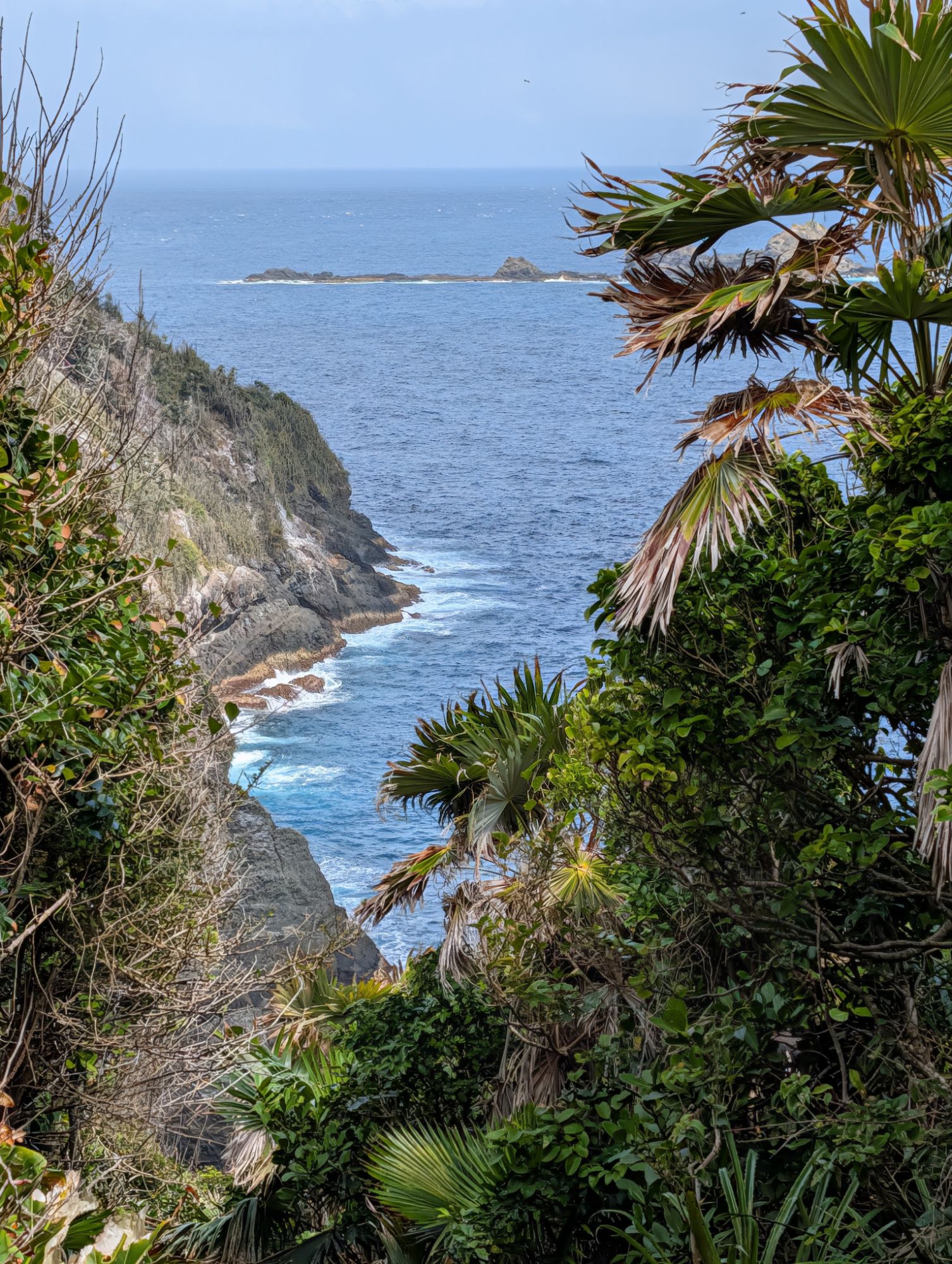
Our cruise ship landed in Tobago but we are going in a glass bottom boat to Little Tobago which is a bird sanctuary with only seasonal access and daily access only from 6am-6pm.
In Tobago, the men love to hunt and cook.
A lime is when two people sit down for food, drinks, and conversation and people keep coming. It is like a spontaneous picnic.
There is a tall Anglican church with a white cross on top that is used by fisherman to navigate.
Every neighborhood has a silk cotton tree. One can easily hide in it. There is a superstition that if you cut it down, you will die. In some places these trees grow over the road. They produces pods every 4 years.
The movie Swiss Family Robinson was filmed in Trinidad and Tobago.
The islands changed hands among France, Netherlands, and Britain 31 times prior to 1814, a situation exacerbated by widespread piracy.
After slavery was abolished, there was a severe shortage of workers. Indentureship of the Indians lasted from 1845 to 1917, during which time more than 147,000 Indians came to Trinidad to work on sugarcane plantations.


Their only water is from the rain. While we were on our hiking excursion, rain started. Listen here:
There are no rats or squirrels on the island of Little Tobago.
Hog plum is a plant food for birds.


The Birds of Trinidad and Tobago by R.A. Barnes on Vimeo or Trials of Life by David Attenborough are wonderful shows to demonstrate the variety of birds on the islands.
Bamboo was brought here for erosion control and animal traps. Bamboo is invasive and can’t be destroyed by fire unless you burn the roots. At the intersection of the bamboo there are many painful stickers. Don’t rub them. They can only be removed by vinegar or baby oil.
Cutting bamboo after the full moon, specifically during the waning phase (between the third quarter and the new moon), minimizes starch and sugar content, making the wood less attractive to pests and fungi. During the waning moon, the gravitational pull draws sap downward, leaving the culms drier and more durable for construction.
Bamboo is used like a cannon in celebrations.

The Magnificent Frigatebird female has a white chest whereas the male has a black chest. At the end of the day after harassing other seabirds for food, they return to their nesting island.

Leave a Reply