Today we once again crossed the Arctic Circle but this time southbound. They had a crossing ceremony but promised no ice although it would have been welcome since it was hot (80⁰F) and sunny. This time we were given cod liver oil and a special spoon that we were allowed to keep.


The seaways are always open. The roads can be closed for 6 months to a year because of snow, avalanche and landslides.

Different Norwegian government agencies have been moved to small villages. Many people work here so it helps the local economy because the workers need groceries, schools, etc. So smart.


peeping Rob.


bird this is. The result was South American tern or Arctic tern. I went with the latter, but I don’t know how far South American
terns migrate!!
Today’s lecture was: How the Norwegian coastline was formed.
There are 1,700 fjords and each has a different name. Fjord is an Old Norse word fare which means to travel from one side to another of the water.
The first settlements in Norway were along the coast and along the fiords.

Norway has strict rules concerning the environment and infrastructure so the number of ships in port are regulated.
The definition of a fjord is that one can sail into but not through, surrounded by steep mountains, and longer than it is wide. Otherwise it is called a bay.
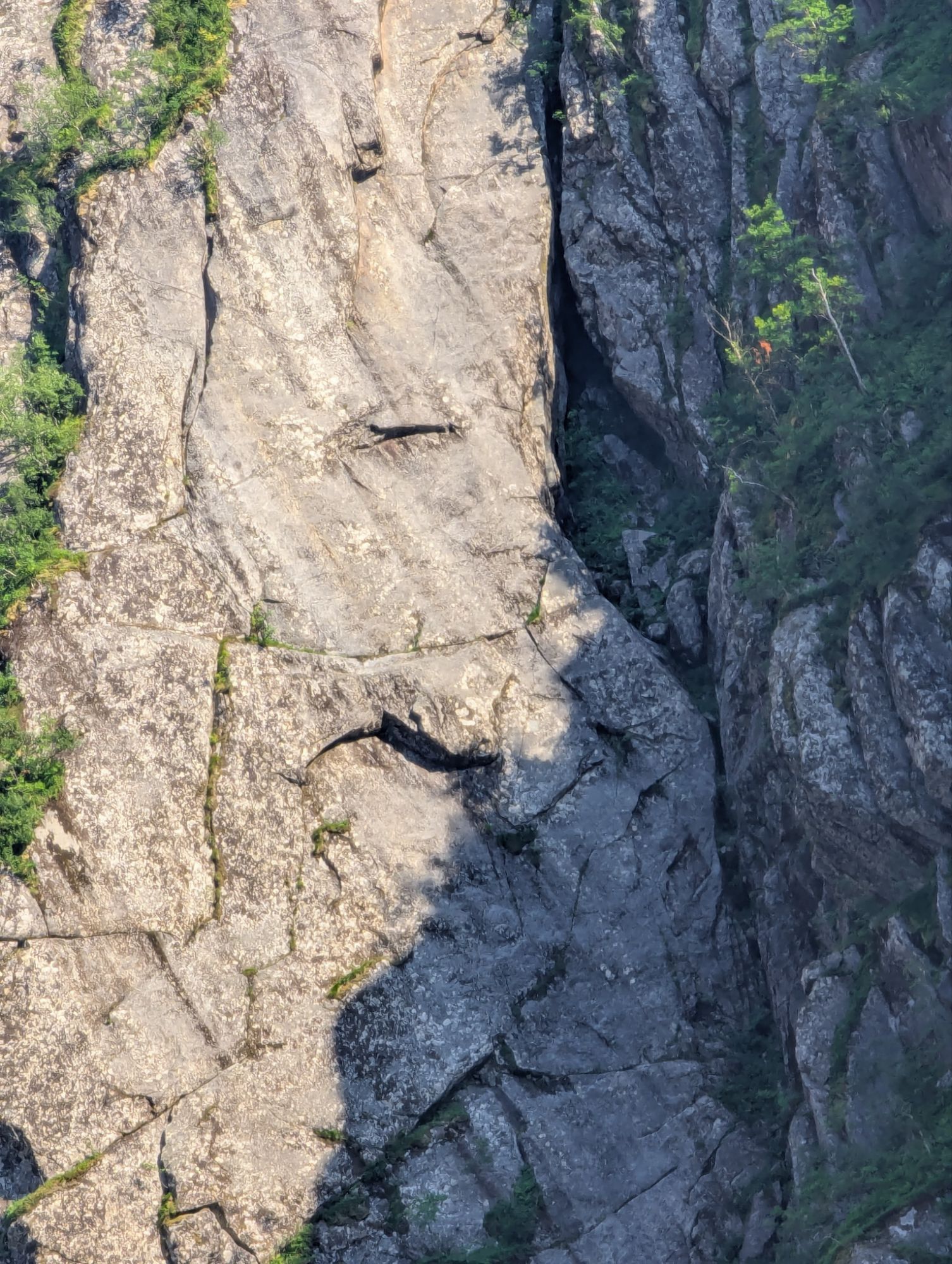
Ice carved the fjords during the ice age. When rocks come loose, it is like a huge piece of sandpaper. One can see scars and striations. Erosion power has taken place in 40 ice ages.
Norway had a different climate and was below the equator 420 million years ago,
Norway is still shifting and moving even today.

Four phases of Fjord Formation
- Phase 1: 146 million years ago-66 million years ago. Low flat land. Warm climate. No ice. Heavy downpours. Erosion.
- Phase 2: 66 million years ago-2.6 million years ago Land mass opened and elevated to form the Norwegian Sea. Rivers were carving out the many types of rock. Remnants of the Caledonian range. High pressure. Folds are created. Subduction comes up to the surface in Bodø.
- Phase 3: 2.6 million years ago-11,000 years ago. Permanent ice cover. Climate was changing. Most of the land was covered. Some mountain peaks were never covered by ice so they look different.
- Phase 4: 11,000 years ago-present. A U-shaped valley has been carved by ice. A V- shaped valley has been caused by rivers and water erosion. Rivers can’t erode below sea level but ice can. A fjord can have both types.
- The land still wants to rise up again today. We are still living in an ice age. There is running water and snow and rock avalanches caused by unstable rocks. Roads are closed and landslides are more common today. Landslides are a mixture of earth and water that starts with heavy rains.
I Have Never Seen a Landslide Like This
Norwegians respect nature. They learn to check the weather from a young age. They have earthquakes but don’t feel them. Avalanches and rock instability are a constant concern. In the winter, ships are not allowed in Geirangerfjord. There is a crack known as Åknesremna that opens up one inch more every year. When that breaks off, it will cause a huge tsunami. Rocks can provide and take away land.
The movie The Wave is based on a true story of a fjord tsunami that happened 80 years ago in 1934 at Tafjordan.
It was 260 feet high, and in 10 minutes the tsunami came in and went out destroying everything in its way.
Norway has 12,000 islands. One special island in the Vega Islands has 10,000 couples of eider ducks. They are better swimmers than flyers. The ducks line their nest with soft down and when they leave it behind, people collect the soft down. This has been done for over 1,000 years. To learn a little more, watch this short video:

Leave a Reply