Gustavo II, the King of Sweden, had a seven-meter wall built to surround the city. He hired he Dutch as urban planners to build and make canals on the swampy land.
Gustavo II also had a moat built around the city. This is what we are riding on today on our boat tour. The dirt that accumulated on the outside made an island that soon became a park.

Boats that deliver workers from the mainland to the island are called “quickies” which has a different meaning in the USA.
Gothenburg has a lot of trams because it was always too muddy for submerged subways. Today they now have the technology to build a subway, but it is still a long way off.
Ship building was one of the main industries in Gothenburg. However, the shipyards are gone. Building ships can be done cheaper and faster in Poland and Asia.
Today Gothenburg is a significant technology hub. It is sometimes called the Silicon Valley of Northern Europe, particularly for its strengths in sustainability, mobility, and automotive innovation.


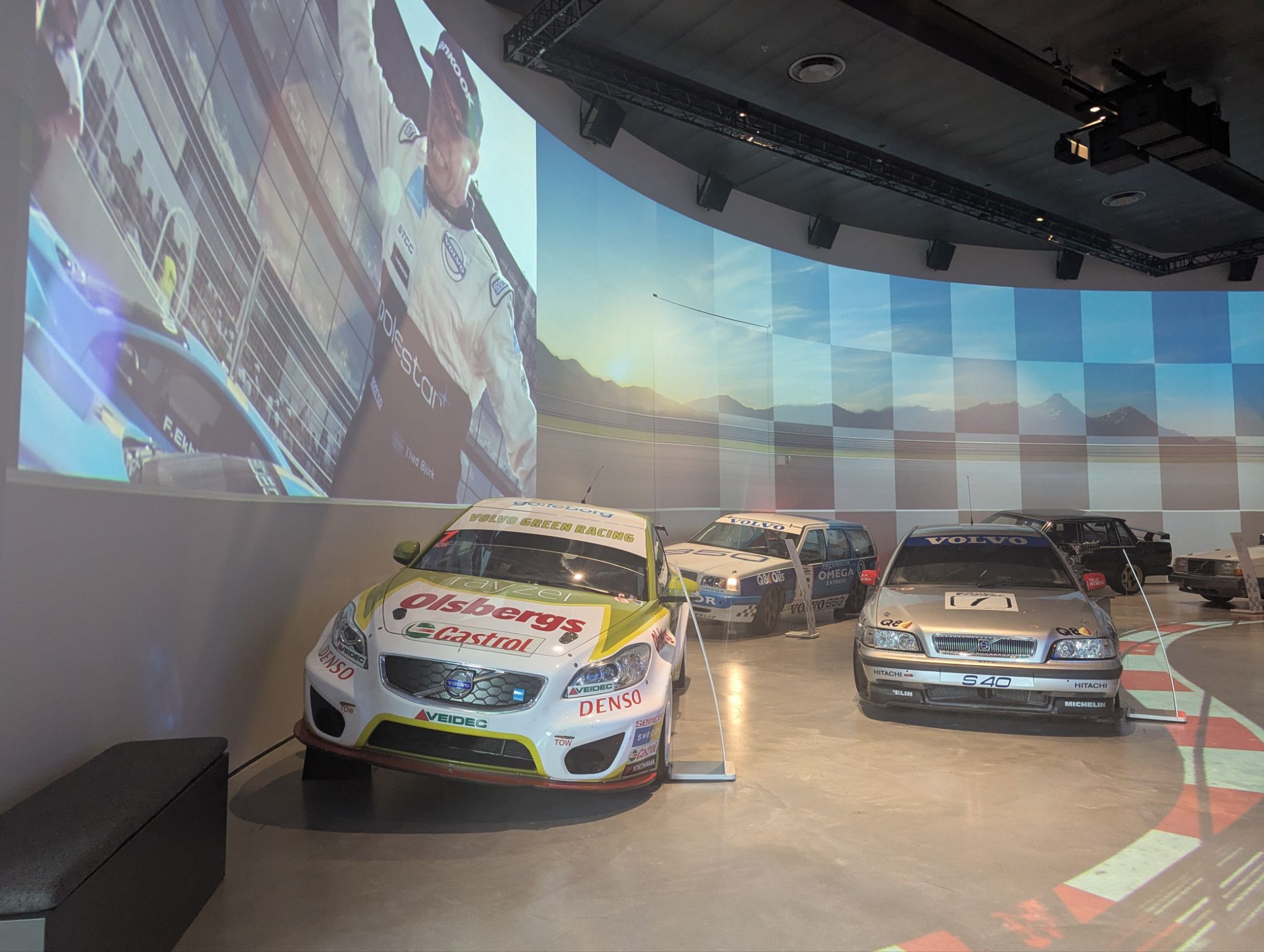
Rob and I said goodbye to Elisabeth who went back to Lerum, and we went to the World of Volvo. Volvo was the first manufacturer in Gothenburg. Volvo is known as the safest car.

Safety engineer Nils Bohlin designed the three-point safety belt that:
- Restrains both the lower and upper body
- Is easy to buckle up single-handed
- Holds the body where it’s the strongest
- Stays in position in a crash
Since Volvo recognized the importance of the innovation, they released the patent and today you can say there is a little bit of Volvo in all vehicles – so far having saved over a million lives and counting.
The impact of speed
We humans can have a hard time understanding the impact of speed. We are better at judging height.
- Imagine climbing up on a dining chair and letting yourself fall headlong onto the floor. That gives about the same impact as a passenger in a car crash at 9 mph if you are unrestrained.
- And if you are traveling at 12 mph, the severity of the crash is more like falling from four stacked chairs.
- To visualize the impact of being unbuckled in a crash at 19 mph – just imagine falling from a stack of eight chairs.
- So please make sure everyone buckles up. Always. (Even in airplanes!!)


Leave a Reply