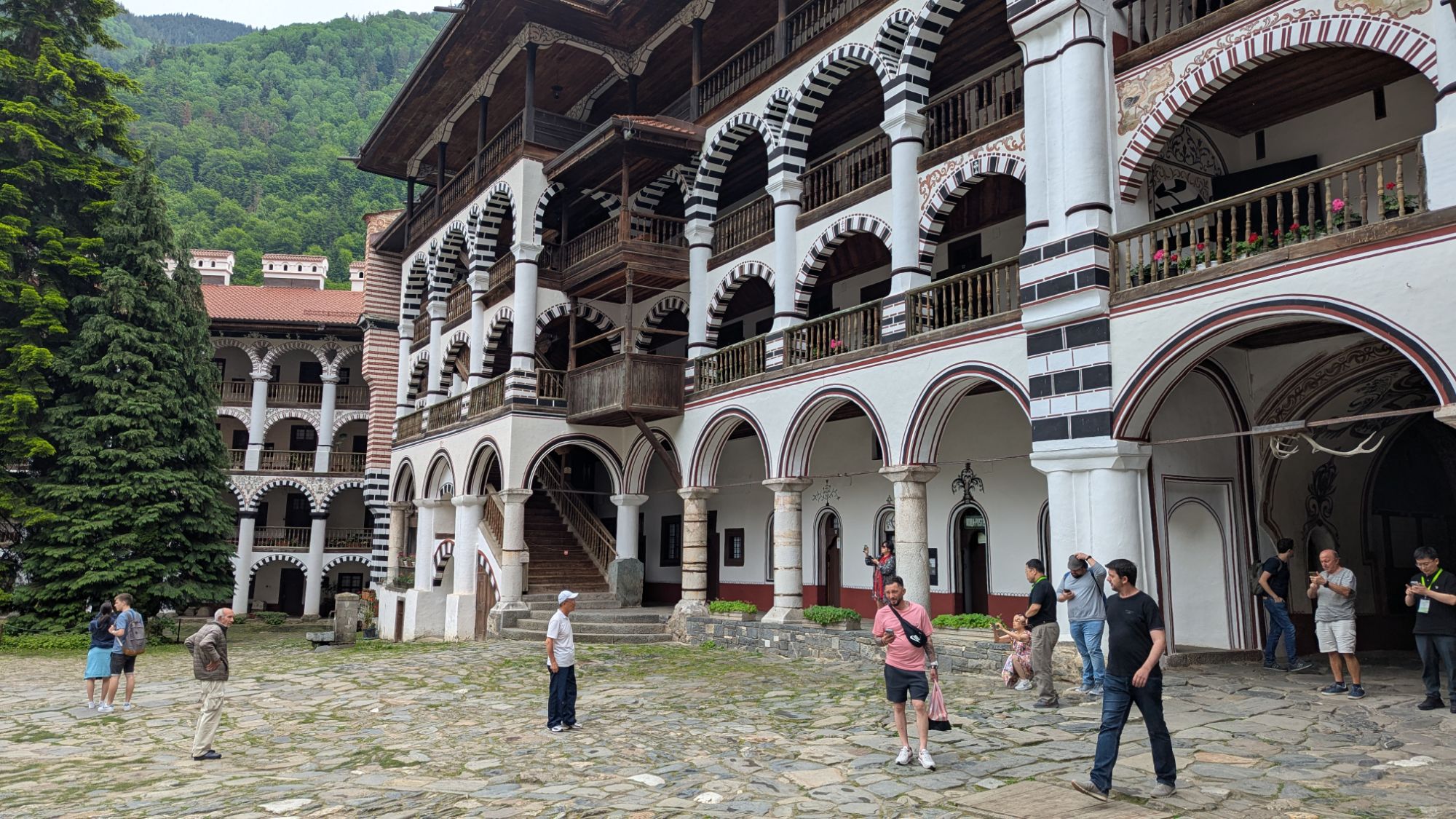
We took an all-day bus trip to see two famous UNESCO churches.
Boyana Church (11th-13th) is the most visited church in Bulgaria. It is so small that only ten people can visit at a time and for only five minutes. Unfortunately, no photos are allowed.

Boyana Church is famous for its vibrant medieval frescoes from 1259 and is one of seven cultural UNESCO sites in Bulgaria. It was granted UNESCO status in 1979.

Click on the following link to see more: Frescoes

The Balkan mountain range is very long and runs from the east to west. This mountain range cuts the country in two, into north and south. Romania is north. There is the Thracian valley in the middle. They were contemporaries of the Greeks during the Bronze and Iron age.
We are now traveling to the second UNESCO site that we will see today: Rila Monastery.

There are three points of interest inside the church at the monastery, but we are not allowed to take pictures:
1. Miraculous icon of the Virgin Mary

2. Iconostasis wall that separates the holy altar from the rest of the church.
3. Grave of the last Bulgarian King Boris III who was very popular. They don’t know where his body is, but his heart is buried here.
We had previously thought that we would like to spend the night in the monastery, but we couldn’t seem to make a connection with the monks who are in residence. There are five in residence. At their peak there were 600 monks living here.
The monastery is named after its founder, the hermit Saint Ivan of Rila (876–946 AD). St. Ivan is always portrayed as a man in a long white beard with testament in left hand. He lived in a cave prior to the building of the monastery.

Ottoman rule.


We went to the historical and religious museum. In the museum is Rafail’s Cross. It consists of 36 scenes of 690 figures from the Bible. These miniatures were carved in one piece of wood and formed a cross. He finished it but ended up blind.

Independence in 1878 brought prosperity to rich merchants and they brought religious gifts to Rila Monastery that are on display. No pictures allowed.


Just outside of the monastery is a bakery where we purchased Mekitsa, a popular fried doughnut often eaten for breakfast. It goes well with yogurt. One could get cow, sheep, and water buffalo yogurt. I got the sheep yogurt. They have a special bacteria called Lactobacillus bulgaricus that is used for making the world’s best yogurt.
Answer: The Rich Man and Lazarus. Note the dogs licking the sores of Lazarus: Luke 16:19-31.
Leave a Reply