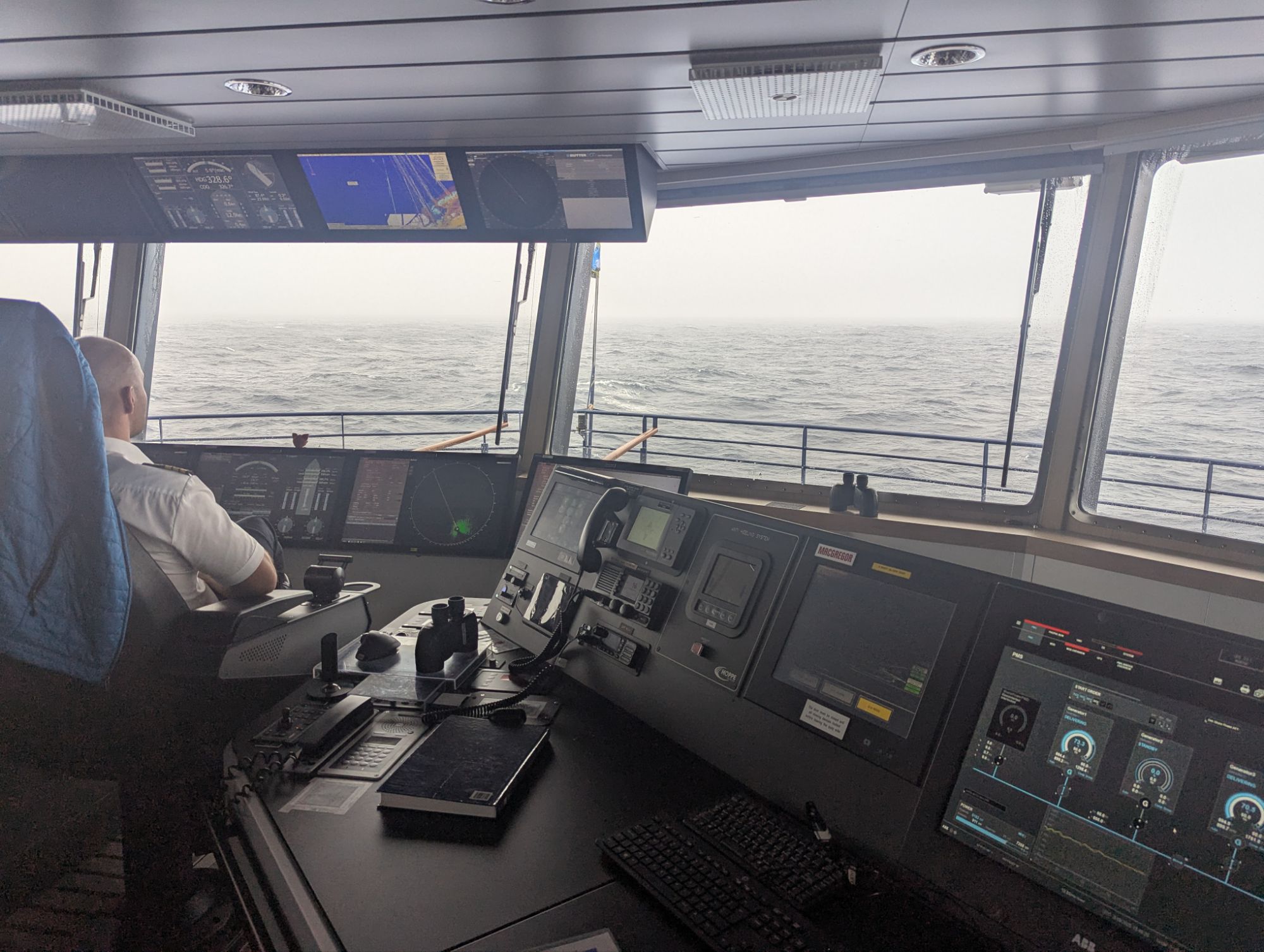
The ship is moving around more this morning. Temperature stands at 33º F. Winds are blowing about 45 knots. They have closed all outside ship areas except Deck 6 aft.
Here is the first photo of the day. Lots of water droplets dot the outside of our windows, blurring the view.

Look at the weather map now. The storm has moved directly across the Drake Passage in front of us.


How big are the waves in the Drake Passage? During the “Drake Lake”, waves will average between zero to eight feet (0m-2.5m), while average conditions are normally eight to 12 feet (2.5m-4m). Extreme Drake crossings can see swells as large as 15-20 feet (5m+). That’s what we will experience.
The front of our ship is surging up and down. Walking toward the stern (back of the ship) when the stern drops is like running downhill. As you move around the ship, timing of steps is everything.
The Zodiac rides and hikes have ended. This morning they collected our rental equipment.
We have started crossing the Drake Passage in a northwesterly direction. Here’s where we are right now.


The crew is preparing the ship for rougher waters. Window covers have appeared in our hallway.

Soon they installed the window covers in our Deck 4 room in case ice or water breaks the glass.

We now have an “inside” cabin.

The glass jars of nuts, banana chips, crackers, etc., have disappeared from the counters.

Heavy weather signs adorn the exit doors to the decks.

Elevators are out of service.

Many chairs have been turned upside down.

Outdoor equipment is covered.

Our cabin attendant placed the soap and stone dish in the sink.

She made a camp of items such as water bottles on our sofa.

Seasick bags are placed strategically at the end of each hallway.

Handrails are arrayed up and down each hallway for people to grab as they stagger from side to side.

Regardless of the weather, the presentations continue. Each day along the Antarctic Peninsula, a couple of divers have gone down to the sea floor. They don’t encounter much current down there. Now they are showing us images and videos from their dives.
Sponges are the longest living species in the world. They are thought to live as long as 15,000 years. The sponges have various mechanisms to protect themselves. Researchers are testing their toxins to fight bad things such as Mersa. The light green shapes in the middle of the photo below are one variety of sponges.

Limpets (sea snails) are widely found in Antarctica.

Currently we are riding about 3-meter swells. The person on the bridge piloting the ship says, “Hopefully it will stay like this, but I don’t think so.” He predicts three hours of this relative calm, then 24 hours of rough seas with swells up to 9 meters (30 feet). Then seven hours away from Beagle Channel about midnight Thursday we will start to feel the shelter of the coast.
They will continue to serve meals but may not be able to use some of the deep fryer cooking equipment.
It’s noon and the wind weather map looks like this. We are in the eye of the storm, the light blue area below the white dot.

At 2:00pm the seas have gotten stronger. Waves are about 5 meters (15 feet). The captain is now expecting them to top out at 6 to 7 meters (19 to 23 feet)
I saw a book fall off of the bookshelf. The name is “The Discovery of Global Warming.”

Some of the chairs are revolving on their own.
The bow of the ship is going up and down. Sometimes the spray from a wave goes higher than the bridge on the seventh deck of the ship.
The lounges are empty. Has everyone gone to their rooms?

The spa is closed. No massages or sauna today.
It looks like we’re about a fourth of the way across the Drake Passage. A lot of ships are sitting in the Beagle Channel waiting for the storm to pass before they proceed south.

We are running on three engines sailing at about 11 to 12 knots, down from 13 a few hours ago. The captain has modified the course to go a little more west.
He said that “the ship is pitching nicely, the X-Bow is doing its job.” There is only a stray fishing boat out here with us. The captain can’t understand why they would cross in this weather.
We will go northwest, then turn northeast and ride with the wind before turning northwest again. See our planned zip-zap course below.

This season has been relatively calm. This is the roughest crossing the ship has had. Other seasons this might be a typical crossing.
We saw a black-browed Albatross fly by. It has an 8-feet wingspan.
I am looking toward the port (left) side and holding the camera level. See how the ship is pitching front-to-back.
The ship is also rolling side-to-side. It is difficult to stand up in our small bathroom. Taking a shower was an adventure.
Edward is not feeling so good. Although he has had a wonderful time on this trip, he declares that it probably will be his last cruise.
Georgie gave us a presentation called “Master of the Wind” about albatrosses. She staggered around a little in the middle of the room.
It is considered bad luck to kill an albatross because they carry souls of dead sailors.
Seventy-five percent of the world’s population of black-browed albatrosses (500,000+ breeding pairs) live in the Falkland Islands. There are 22 species of albatross. 18 are significantly threatened, Black-browed albatrosses have been steadily increasing in numbers since the 1970’s. Scientists don’t know why. Wandering and grey-headed are declining drastically.
Albatrosses are pelagic which means they spend all of their lives at sea. The ocean is their home. Every time they go to land they put themselves at risk.
Albatrosses have excellent eyesight and sense of smell. They are scavengers. Albatrosses use less energy staying in the air than landing on the water. When they land it can be like a crash landing. Sometimes they can even break their necks.
These birds do dynamic soaring. They use the air currents coming off of the waves to soar, and then they drop back down. When their wings are fully outstretched, they have a tendon mechanism that locks the wings in place.

Albatrosses return year after year to the same nest.
Current seas are 4-to-5 meters with swells up to 7-to-8 meters, which is what was expected. Winds averaging 60 knots are gusting to 75 knots (80 miles per hour). The winds are blowing toward the ship at an angle (see the orange line below).

The swells are about 100-to-150 meters apart. Some are closer together. The conditions will stay like this until midnight. Overnight we’ll turn and put the swells on the stern.
The captain commented that earlier a cabinet door opened in the galley, and a bunch of dishes crashed to the floor.
About a hundred miles from here a 27-meter yacht is out in the storm. I wouldn’t want to be on that boat. Hopefully we won’t have to go rescue them.
More and more storms are pushing toward the Antarctic Peninsula (farther south) than in the past. This produces warmer, wetter weather.
At dinner Marvin told me to hang onto the table to avoid falling over backward in my chair. When one huge swell came along, someone did fall over. He’s fine. Everyone was making noises like on a roller coaster. More dishes were crashing in the kitchen.
I told Antonio that I wanted a Coke, and I needed a double. This is what he brought me.

Here’s tonight’s wine glass. They asked each person to watch over their own table setting.

They have stopped preparing soup because it is too dangerous.
We’re currently somewhere southwest of the white dot.

Surprisingly, the sun has just come out.

Cruise mapper.com shows that we currently are the only cruise ship crossing the Drake Passage. Soon we will turn northeast.

After dinner we ate popcorn and watched a new BBC documentary about killer whales just released a few days ago.
Pack ice killer whales can live beyond 100 years. They are one of the few mammals that survive past child bearing years, like humans do. The matriarchs continue to lead and teach their families.
Weddell seals can dive as far as 600 meters and stay under for 18 minutes on a single breath. They are a favorite food of the killer whales.
At 10:00pm here is our progress across the Drake Passage.

This Drake crossing has been exciting. The trip has been everything I expected.
Click on this link to read the report from our cruise ship -https://www.expeditions.com/expedition-stories/daily-expedition-reports/drake-passage-ed-2025-02-19?email_md5=323649af63a8215a85f9923f6a86435f&hmc_lid=3&mi_u=323649af63a8215a85f9923f6a86435f&utm_campaign=DER.SELF&utm_medium=email&utm_source=Triggered
Leave a Reply