Today we switched hotels and joined our cruise tour group. We are staying at the Alvear Icon hotel in the Puerto Madero district. It is named after Carlos María de Alvear, an Argentine soldier and statesman, and Supreme Director of the United Provinces of the Río de la Plata in 1815. He lived from 1789 to 1952.

During the afternoon our tour bus drove down Avenida de Alvear. Many of the buildings were originally built to be private homes. They have been converted to the Grand Hyatt hotel, the Vatican Embassy, the French embassy, and such. Imagine living in a home like that.
January and February are the holiday months here during their summer. School begins at the end of February. Usually the high temperature this time of year is about 82º F, but today it reached almost 100º F.
The European Immigration Wave to Argentina was the period of greatest immigration in Argentine history. It occurred approximately from the 1860’s to the 1960’s, when more than six million Europeans arrived. This wave consisted largely of Italian and Spanish immigrants. Other significant groups arrived including the French, Basque, Germans, Jews, Arabs, Polish, Hungarians and Russians.
Also mixed African and indigenous people live in many places in Argentina, including rural areas and the neighborhoods of Monserrat and San Telmo in Buenos Aires. African communities gathered in these neighborhoods after Argentina abolished slavery in 1853.
In the aftermath of World War II, Argentina became once again a desirable destination for European immigrants. In general, Argentine migration policies during the 1946–1965 period promoted European immigration and clearly linked migration to the developmental needs of the country. Between 1946 and 1950, President Juan Perón created a pathway for prominent Nazis, collaborators, and other fascists from Europe.
Eating out is an important part of the Buenos Aires lifestyle. When the local people (porteños) eat at tea houses, cafes, and restaurants, the food and drink is usually ordered and served at the tables.
Undergraduate education is free for everyone, including foreign students, at public universities in Argentina. This policy is being discussed today since other countries charge their foreign students. Private universities here, however, do charge tuition.
El Zanjón
We visited El Zanjon (translates as “the big ditch of rainwater”) de Granados. It is a restored 19th-century mansion that contains a labyrinth of tunnels, sewers, and cisterns.
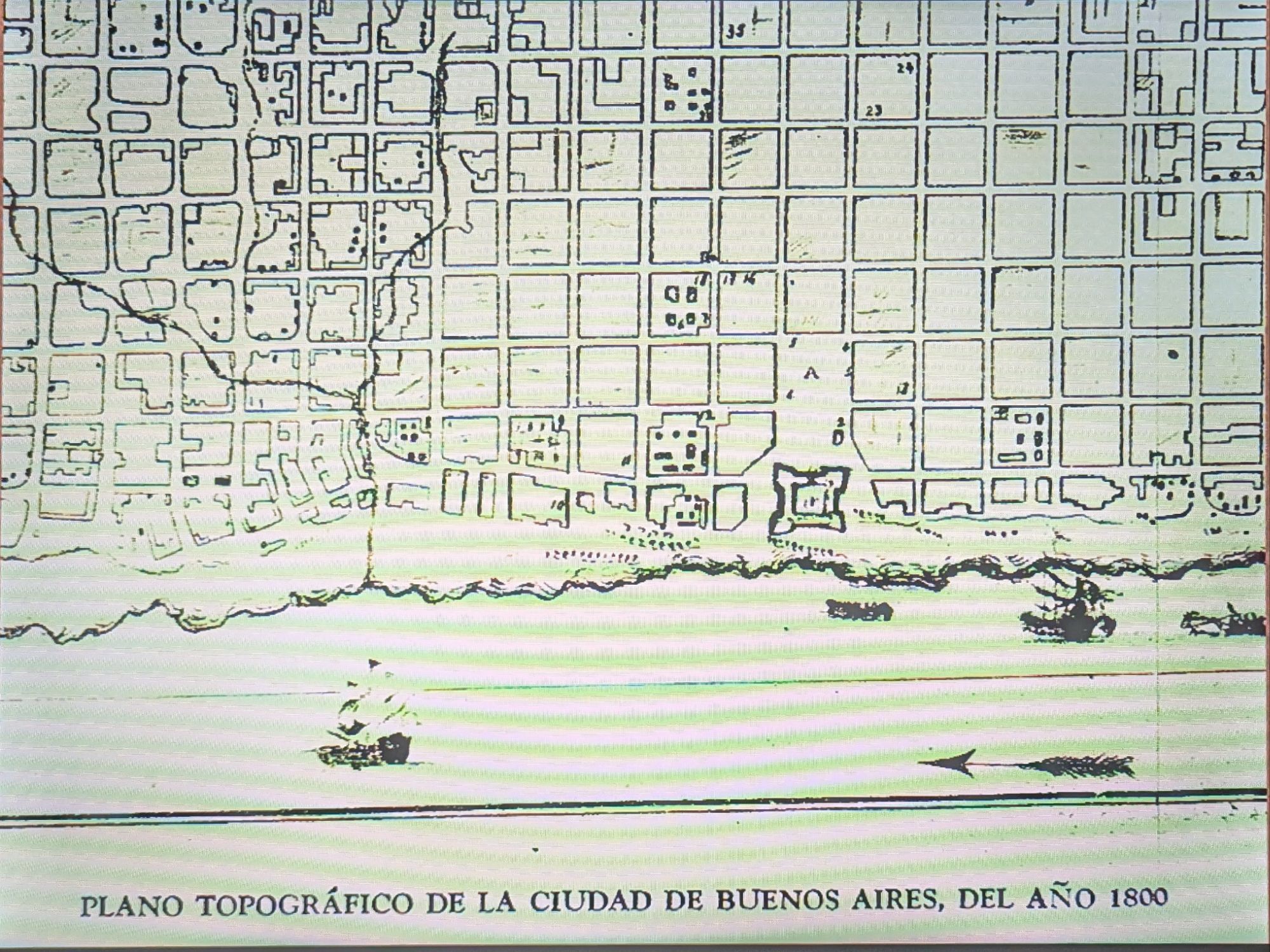
El Zanjón was accidentally rediscovered by chemical engineer, Jorge Eckstein, in 1985 beneath a large house built in 1830 in San Telmo, the neighborhood where he grew up. He bought the building without knowing what was underneath. Squatters lived below. Eckstein stopped his original project and spent 38 years excavating and preserving the underground tunnels and restoring the buildings above. It’s believed that the first settlement of the city was located in this area in 1536.
This part of San Telmo was struck by yellow fever, cholera, and typhus in the 1870’s. The wealthy people moved to the north part of the city. European immigrants moved into the colonial buildings and tenements, where families lived in cramped quarters.
Eckstein unearthed more than 130 truckloads of debris from the tunnels, including French tiles, African pipes, and English china.


Tango
We walked across the Puente de la Mujer again today. Buskers performed the tango dance for us.

Tango evolved in the 1880’s from the Argentine Milonga dance combined with the Cuban Habanera and a light-spirited Spanish flamenco. It incorporated African drums, with the accordion from Germany, the violin from Italy, and the Spanish guitar. The tango dance originated in the brothels and lower-class neighborhoods of Buenos Aires and Montevideo, Uruguay.
In the beginning Tango was not accepted by the high class. Then sailors took it to Europe where it became a craze in fashionable circles by 1915. and Argentina followed.
Recoleta Cemetary
Recoleta Cemetary was founded in 1822. Covering about 14 acres, it has approximately 4,700 graves. The cemetery is the final resting place of many notable Argentinians, including presidents, writers, and Nobel laureates. Over 90 of its tombs are listed as national historical monuments. There is no more room, but you can still inter more people in a mausoleum that you own.


Evita came alone to the city at age 16 to become an actress. When she was 24, she met Juan Perón at a charity festival. He was 50. Two years later he was elected president. Evita was loved by half of country and hated by the other half. She died of cancer in 1952.
Her funeral lasted 16 days. Evita’s blood was replaced with paraffin. That’s why she looked like a doll. Her body was kidnapped in 1955 by the same people who accomplished the military coup that year. It was found in a cemetery in Milan, Italy, in 1971, brought back to Argentina, and buried in Recoleta Cemetary in 1976. Evita’s grave is 8 meters below ground for security.
Juan Perón returned to power in 1973. He died a year later. His third wife, Isabel, succeeded him as president. Another military coup occurred in 1975. Democracy returned in 1983.
About 20 fútbol (soccer) stadiums dot Buenos Aires.

Leave a Reply