Friday, October 4, 2024: “Buttswana”

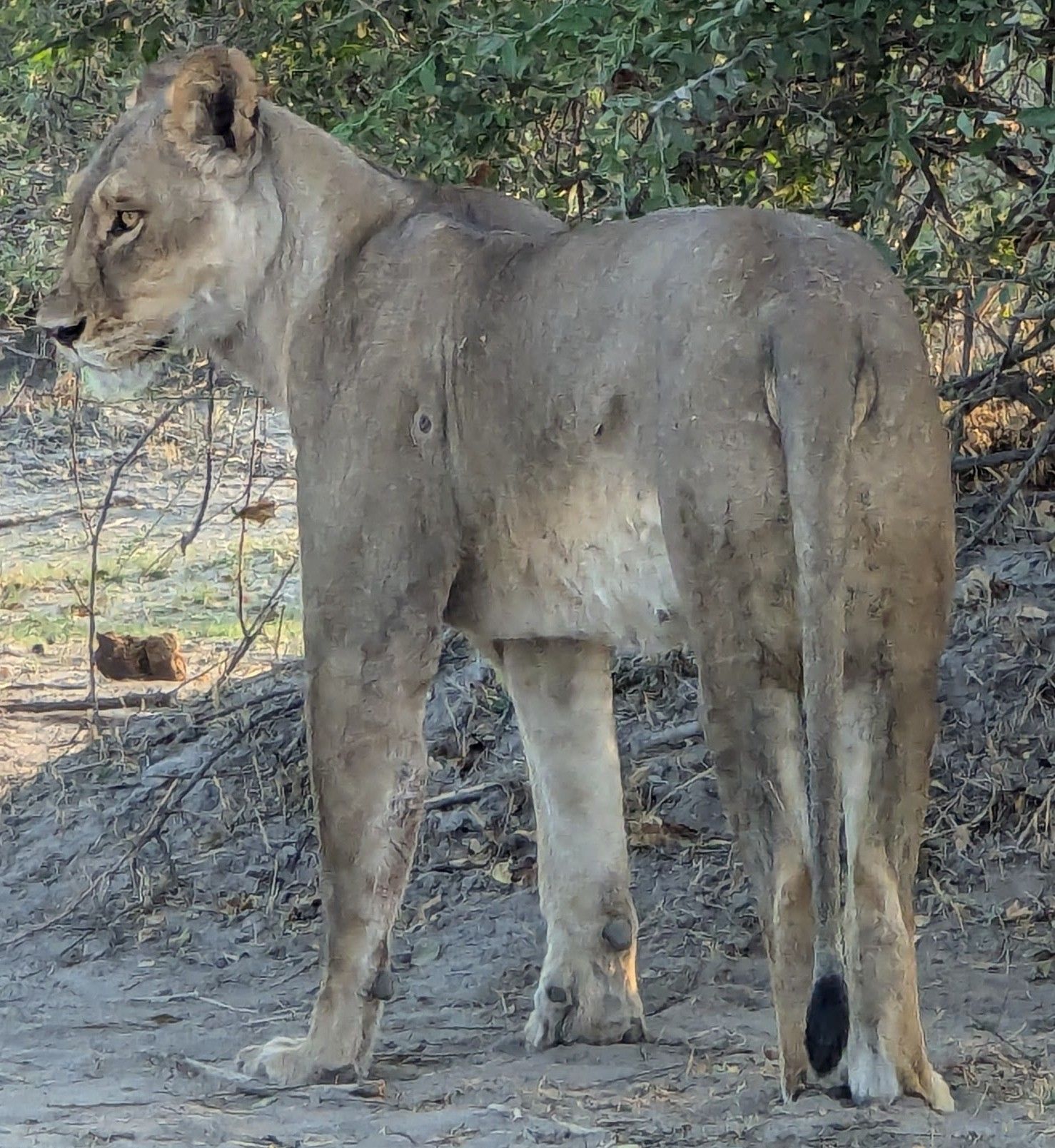
A final comment about our trip. Animals in Botswana often were shy about our presence. Many times we would see only their backsides as they ran away from us. This caused some of the photos to be a little blurry.

Can you name each animal? It will be difficult. The answers are at the bottom of this post.

These tall animals struggle to bend down to drink water from pools.
This antelope is the national animal of Angola.
See the oxpecker bird eating insects on this animal’s left leg.
This animal’s butt looks like a toilet seat.
These animals are very dangerous to humans. They wallow in the mud and water during the day and come out at night.
These animals are skittish and have trouble making up their minds about which way to go. They migrate in large numbers in Botswana, Tanzania, and Kenya.
We saw one of these animals try to steal a bag that a woman was carrying.
This animal is the lion’s favorite food, but they are very dangerous and hard to kill.
This antelope has an “M” on its butt. They are nicknamed “McDonald’s of Africa” because they are fast food for the predators.
This animal is identified as a female because of the wide, black vertical stripe under its tail.
These animals with slender legs run in packs.
Reclusive. They drag prey up into a tree.
The fastest land animal.
Here’s an easy one – they “never forget”.
One of the Ubiquitous 5, these birds are constantly on the run.

List of animals in the photos:

  1. Giraffe
  2. Sable Antelope
  3. Kudu
  4. Waterbuck
  5. Hippo
  6. Wildebeest
  7. Baboons
  8. Cape Buffalo
  9. Impala
  10. Zebra
  11. Wild Dog
  12. Leopard
  13. Cheetah
  14. Guinea Fowl
She has already left for her next short trip. I miss her.

2 responses to “Friday, October 4, 2024: “Buttswana””

  1. Amy Avatar
    Amy

    LOL

  2. RNP Avatar

    ha ha

Leave a Reply

This site uses Akismet to reduce spam. Learn how your comment data is processed.

Discover more from Streets of the World

Subscribe now to keep reading and get access to the full archive.

Continue reading