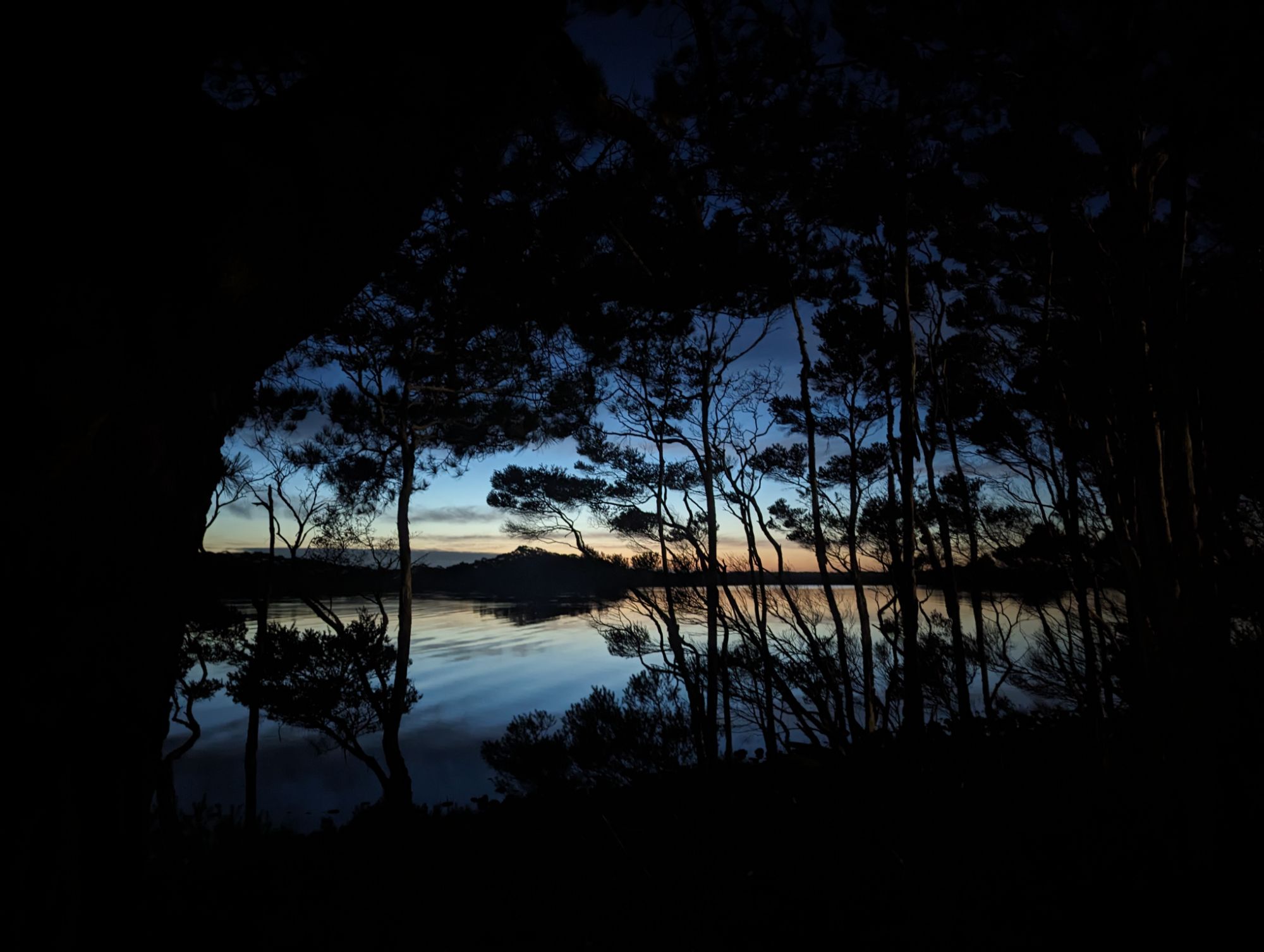
Strahan (pronounced Strawn) was founded in 1882 to mine tin. The town is situated on Macquarie Harbor which is over five times larger than the Sydney Harbor. The water is brackish with a freshwater layer on top and saltwater layer along the bottom. This makes for a more diverse aquatic population.
Tannins originating from tree roots run into the water which make the water dark. It is called the world’s largest cup of tea.


We cruised to Sarah Island which was known as the harshest penal colony in Australia. The worst of the worst were sent there. Sarah Island was a place for secondary offenders, a banishment settlement for monsters from 1822-1834. It was hell on earth so no wonder the narrow and rough entrance to Macquarie Harbor is called Hell’s Gate.
It took three weeks to get to Sarah Island from Hobart. They cleared the land when they first arrived, then built a wind block. This was to be a permanent colony.
Convicts had left society. Conditions were harsh: scurvy, food scarcity, harsh weather conditions, poor soil for farming. The island is surrounded by water and then dense temperate rain forest. One fourth of all convicts tried to escape at least once.
If one tried to escape, the penalty was 100 lashes and six months of leg irons. The lashes were to be delivered within one hour. They were bound above their heads and a cat o’ nine tails was used. Sometimes it was soaked in salt water. Sometimes shards of glass or bits of ceramic were put on the ends. It was meant to perforate the skin.
On Sarah Island, there were public floggings. Leg irons prevented an escape by water. Many people in the 19th century didn’t know how to swim and would drown. However, it was cold and wet. Staying alive was the issue.

When floggings occurred it was meant to be theatrical. The lash would start to be administered as the governor turned while pacing back and forth to the beat of a drum. The convict would be unconscious by the end of the flogging.

Piners (riverboats) became “pine gold” as rafts of timber were pulled by these steamboats.
Here are some of the famous convicts:
- Matthew Brady was a convict hero who escaped on a boat and became an infamous bushranger.
- James Goodwin escaped and scavenged food and traversed Tasmania from west to east.
- A convict named William Holliday screamed and cried for mercy to no avail. He died on the post.
- Alexander Pearce escaped with a group of convicts which dwindled down to one. He is known as a cannibal convict. This dark tale is told in a movie called Van Dieman’s Land. That was the early name of Tasmania.
Cannibalism was less rare back in the 18th and 19th century and not unique to convicts. Sailors would put women and children overboard when they needed to lighten the load and preserve food supplies. Eventually, they would eat the less able in order to preserve the skills and fitness of the group. It is called the Custom of the Sea.

Flogging made the convicts more belligerent which led to more floggings. It was a vicious cycle and could not quell rebellion or attempted escapes. They tried isolation but that was worse and they often went mad.
The accountant kept a flogging log. The annual total was 8,000 lashes in 1828. In 1829, it was 800. Public pressure, a changeover in leadership, AND realizing that the convicts were needed to build the ships affected the number of floggings.
Eventually, there was a thriving black market economy. The military had established an informal economy of rum and unauthorized food. With things out of control, Sarah Island closed and the convicts were sent to Port Arthur.
Tasmanian Wilderness World Heritage Area is the only UNESCO site with the distinction of wilderness in the title. It is the largest cool temperate rain forest and covers about one fifth of Tasmania. This land was the last land to breakaway from Antarctica. It is what Antarctica looked like except for the addition of huon pine.

Aboriginal hunter gatherers came into constant conflict with the settlers. They have been here for 2,000 generations with not much detriment to the land. It took the outsiders about 200 years to negatively affect the land. This area was and is a pharmacy to the aboriginals. We could learn much from them. They know, for example, that a rain forest cannot regenerate from fire.

The west coast of Tasmania is the reference point for air quality. The air has traveled over the ocean from far away South America so the air is free from pollution. Inhale deeply, my friend!!
The Ship That Never Was

Tonight we attended Australia’s longest running play that tells the dramatic and hilarious true story of an 1834 amazing escape from Sarah Island.

Instead, the convicts sailed to CHILE. There was a lot of audience participation and even if one wasn’t chosen for a part, we were all given squirt bottles to simulate stormy conditions.

Leave a Reply