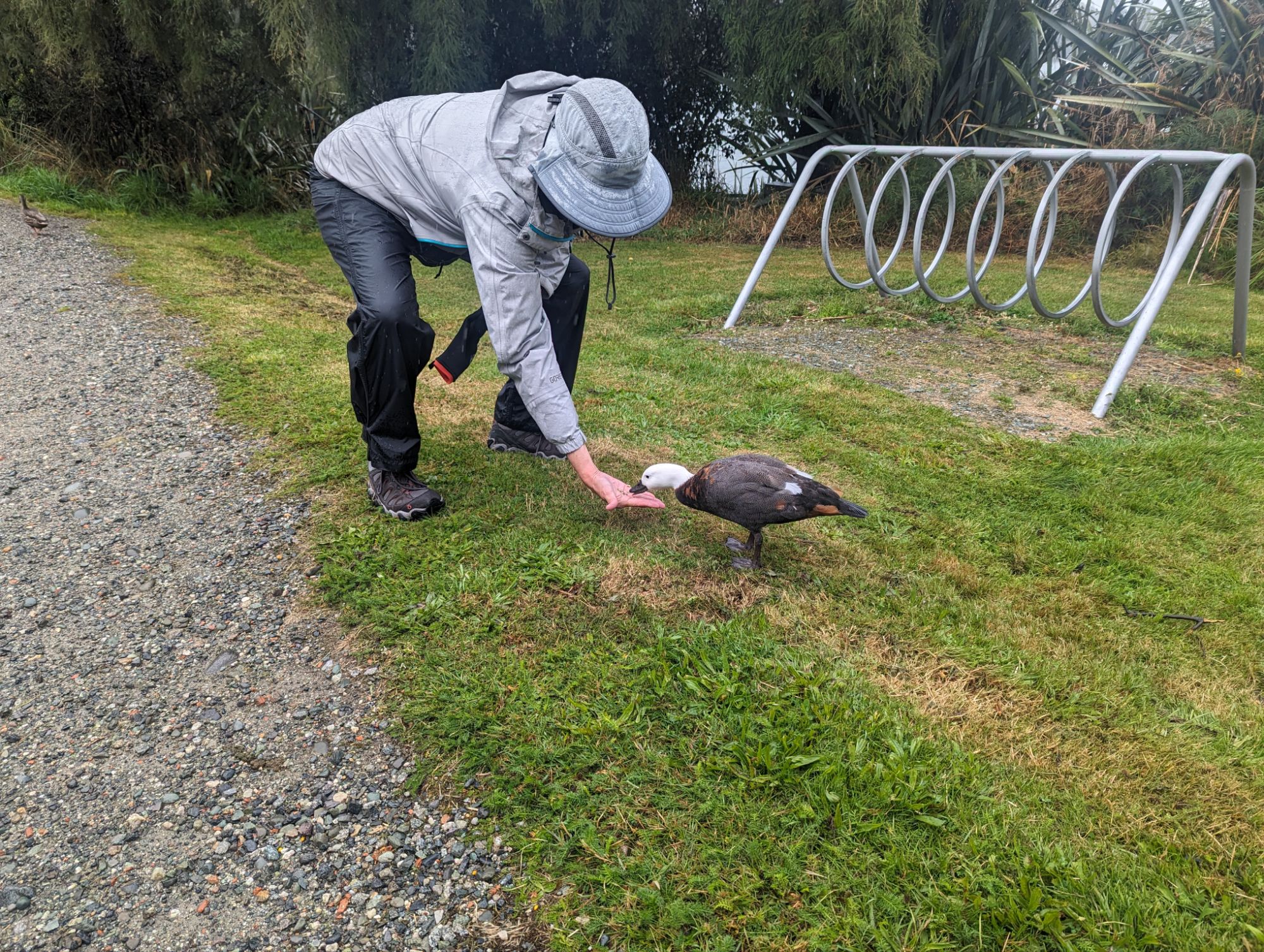
We woke to pouring rain outside, and checkout is 10:00am. Fortunately, our hotel will let us store our luggage until our bus leaves around 5:30pm. So now what?


We hitched a ride back to town with a brave Austrian woman who had rented a car. She said that the trick is to stop thinking how it is different and just embrace it for what it is. Good advice!
We got out of our wet clothes. Rob needed a haircut, and we had time on our hands. They said that they were pretty busy but could squeeze him in on February 27!!! Ha!

Lunch at Wapati Cafe focused on deer in New Zealand. Deer were introduced to New Zealand (Remember there were no mammals in New Zealand before the arrival of man):
- Between 1861 and 1919, 250 red deer from the great English parks in London and from the Scottish Highlands were released in New Zealand for sport. They were either brought directly from the UK or came via Australia.
- Theodore Roosevelt, President of the USA, “gifted” 10 elk from the National Zoological Park, Washington DC. Ten more were purchased. Both groups of elk called Wapiti, initially originated from the Yellowstone National Park, Wyoming USA.
They left San Francisco on route to New Zealand, a 10,000 kilometre sea journey. Prior to arrival, the ship encountered heavy storms, two animals died of broken bones. The 18 survivors reached the sound and were bought ashore in their crates and released.
Soon they had a problem on their hands. With no natural predators, the deer population exploded and was having a detrimental affect on the land and native animals.
First, hunters called cullers were asked to kill as many as they could. The deer were shot and left on the mountains. The hunters soon found that they could shoot dder from helicopters. They realized that there was a market for the meat especially in Germany so they gutted them, and the helicopters carried them out by their hooves. Also, the velvet stage of antlers are prized for their medicinal value in South Korea.
Next, they decided to catch the deer live and put them in deer parks. The hunters started to shoot a drug to stop them but it took too long to take effect.

Later they developed a net device that would capture the running deer. It was very dangerous and competitive but lucrative. One pound of venison for one £.
Deer hunts yielded 8,000 per year in the early 1930’s to over 40,000 per year in 1940. By the 1950’s the culling force of 125 men killed about 50,000 deer a year.
Today deer parks are everywhere in New Zealand. They erect 6 foot fences to keep them from jumping over.
There was a recommended documentary called Deer Wars showing at 4:00pm at the local cinema where this whole process was revealed. A perfect ending to a wet day in Te Anau.
Leave a Reply