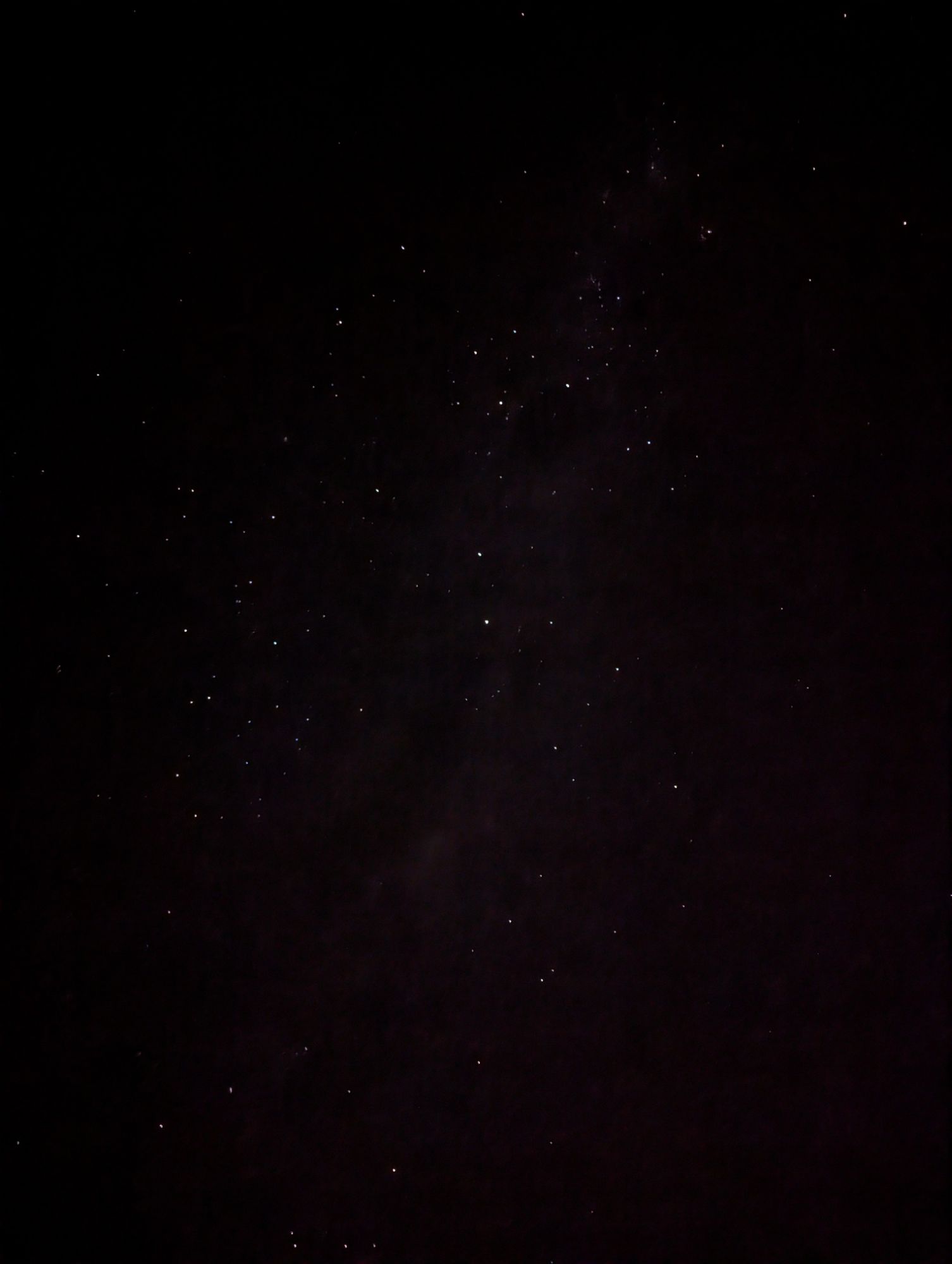

Tekapō is part of the Aoraki Mackenzie International Dark Sky Reserve. The reserve comprises 4,300 square kilometres. It is the largest Dark Sky Reserve in the world. To become a dark sky reserve, those advocating for Aoraki Mackenzie had to supply a database of every street and outdoor light in the zone and show community commitment to the plan. Outdoor lights must shield up-spill and sports venues have a curfew on floodlights.
Over the past century, humans have become addicted to light – in our streets, our homes, and even the devices we carry with us. Our traditional knowledge and connection to the stars is being eroded, day by day.
Light pollution is defined as wasteful lighting. Badly directed street lights, overlit buildings, all-night security lighting anywhere that light spills out from where it’s needed.
The loss of darkness comes at a cost. Our circadian rhythm is set by the arrival of daylight. Light pollution turns night into day and this upsets the natural hormonal responses of our bodies.
One suggestion I can do is draw the curtains at night when the lights are on…or maybe I will just go to bed early when it gets dark.
The night sky should be accessible to everyone on the planet – tonight, tomorrow and into the future. “Because when we lose the night sky, we lose a part of ourselves.”


Here are a few things that we learned:
- BIG LESSON: One must turn off adaptive brightness on their phones.
- Dress warmly and then add another layer AND they will also supply an additional coat at the Dark Sky Project.
- Eighty-eight constellations are identified throughout the world. This is so when one is talking about a specific star, one can give a rough location instead of searching the whole sky.
- In the northern hemisphere we have a “fixed” star, the North Star, named Polaris, around which all of the constellations appear to rotate because of the revolution of the earth on its axis. The North Star tells us directionally where true north is and can be used for navigation.
- In the southern hemisphere they do not have a fixed star. The stars rotate around a dark area. It is possible to approximate the location of a south celestial pole in a few ways. FIRST WAY: Find the Southern Cross constellation. It is very prominent in the sky. Measure the distance between its far points (longest dimension), multiply by four and extend that distance from the bottom star of the cross. SECOND WAY: There are two pointer stars that help you locate the Southern Cross, Alpha Centuri and Beta Centauri. You can start from the midpoint between those two stars and draw a line that intersects the line from the Southern Cross. THIRD WAY: Put one hand pointed at the top star of the Southern Cross and another hand pointed at the bright star Achernar. Clap your hands together. That is the location of the south celestial pole.
- Our planet, Earth, is located in a galaxy of stars called the Milky Way. Every individual star that you see in the sky is part of our galaxy. The Milky Way is a spiral galaxy of about 200 billion stars. We are on the edge of the Milky Way in one of the spiral arms. If you look at the constellation Sagittarius, you are looking toward the center of our galaxy.
- Tonight as we look at the band of stars between the constellation Orion and the Southern Cross, it looks “cloudy”. The hazy appearance is because, in addition to dense gas and dust, there are numerous stars in the region that are very distant; our eyes cannot distinguish the stars as separate points of light. We are looking toward the thick part of our Milky Way galaxy. With some optical aid, we can see some of the individual stars.
- We can see the Milky Way in the northern hemisphere during the summer months, but it is brighter here in the southern hemisphere. There were Swedes on the tour, and they call it the Silver Stream. Different Names for the Milky Way by Country
- We believe that almost every large galaxy has a supermassive black hole at the center including our own Milky Way. We can’t see the black hole, but we can observe its gravitational effects on other objects around it.
- Tonight we looked through three telescopes at Mt. John Observatory. We saw globular clusters of stars, nebulae which are clouds of stars being formed, and the group of stars called the Jewel Box. It is an open star cluster, located in the Southern Cross, that looks a bit like a piece of jewelry.
- We also viewed Alpha Centauri, the closest stars to us other than the sun. Alpha Centuri consists of two stars that rotate around a common point every 79 years. They are about 4.3 light years away from us, so the light that we see coming from them left there more than 4 years ago. At the speed of our current fastest spacecraft, it would take us 120,000 years to get there.
Time for bed.
Leave a Reply