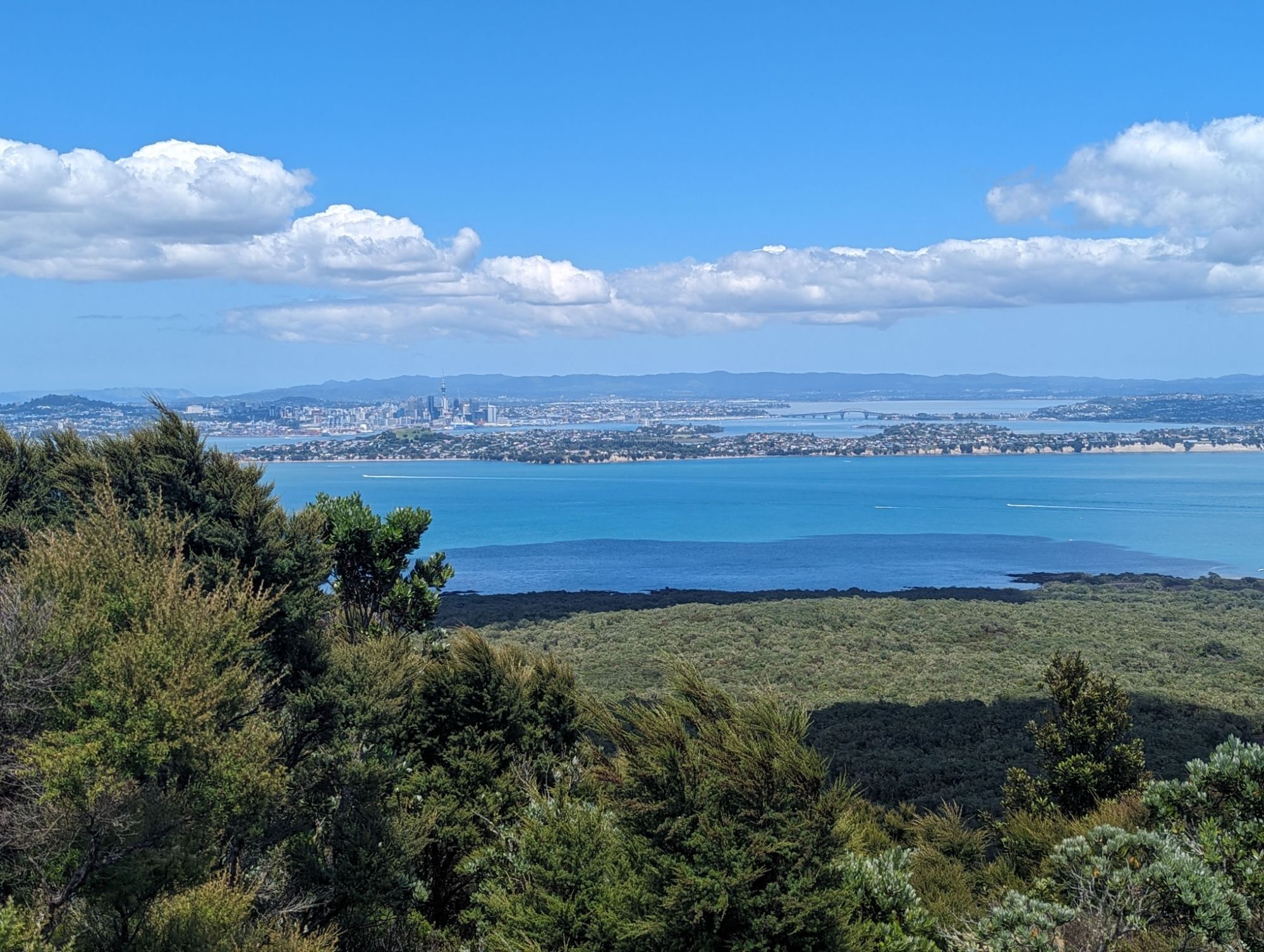
Today we boarded a morning ferry to the island of Rangitoto. I can never remember the names of places. Is it Ratatouille or Roto-Rooter? It gives Rob a laugh.
Rangitoto is the youngest and largest of the approximately 50 volcanoes of the Auckland volcanic field, having erupted in two phases about 1450 and 1500.
I wanted to make sure that it is dormant since I remember tourists going to a New Zealand volcano island called White Island/Whakaariin in December 2019 that erupted. I have always understood that you have some warning about a possible eruption. I read a little about it and they were on an Alert 2. I think that I would have passed on that excursion. I am not sure about Rob. My mom and dad always said that they wanted to die at the same time by volcano. There wasn’t much of a chance of that happening in Kansas.


After a picnic lunch, we marched around the crater before heading back down.
New Zealand is home to some unique and ancient wildlife that is found nowhere else in the world. This is because New Zealand has been geographically separated from other land masses for over 80 million years, so the native wildlife has evolved in isolation much like the Galapagos.
New Zealand has been described as a ‘land without teeth’ due to the fact there are no native terrestrial mammals except for two species of bat. This isolation and lack of predators has left native species particularly vulnerable.
Since people and pests arrived in New Zealand, many native animals have been driven to extinction, including 42% of all bird species.
Today, predation by introduced mammals continues to be the single greatest threat to their iconic wildlife.
After the volcano-formed island had cooled, mosses and lichens began to anchor themselves to the lava. When they die, the decayed matter turns into rich humus which provides moisture and minerals for seeds to grow. Trees give shelter to birds and attract insects which in turn pollinate. Next, orchids and shade-loving plants arrive. This succession takes many years.
Some things are different on this island. Mangroves usually grow on the mud on tidal estuaries. On Rangitoto they grow directly on lava.
The pohutukawa forest of Rangitoto is the largest remaining in the world. Such forests were once common to the Hauraki Gulf but coastal development and human occupation of the islands has meant that pohutukawa are now usually seen only as one individual tree.


It was Saturday night and things were hopping at the Eastern Viaduct in downtown Auckland. We dressed up (in our clean clothes) and went to dinner at Soul Restaurant. I had the most delicious whole food plant based meal called The Green Goddess. It was edamame, quinoa, green beans, peas, broccolini, avocado, sesame seeds, and roasted cashews. The dressing was a cashew based green goddess with dill, mint, and “other green stuff”. All served on a blate which is a fusion of a bowl and plate. Maybe I should eat it with a spork (spoon and fork)! Ha!


Leave a Reply