
This morning we walked across the Galata Bridge that spans the Golden Horn waterway. The bridge has long acted as a symbolic link between the old city of Istanbul, site of the imperial palace and principal religious and secular institutions of the Ottoman Empire, and the modern districts of Beyoğlu, where a large proportion of the inhabitants used to be non-Muslims and where foreign merchants and diplomats lived and worked.
Two lanes of traffic and a tram line run across the top level. In 2003 a string of restaurants were added to the underside of the bridge in imitation of the more ramshackle ones that had clung to the underside of the previous version of the bridge.

We climbed Galata Tower this morning. I was disappointed that an elevator took us most of the way to the top. This stone tower was built in 1348 to replace a wooden tower that dated from the 6th century. In 1632 Hezarafen Ahmed Çelebi built glider wings and jumped from the tower. He sailed 2 miles across the Bosporus from Europe to Asia making that the first transcontinental flight.


A birds-eye view from Galata Tower.

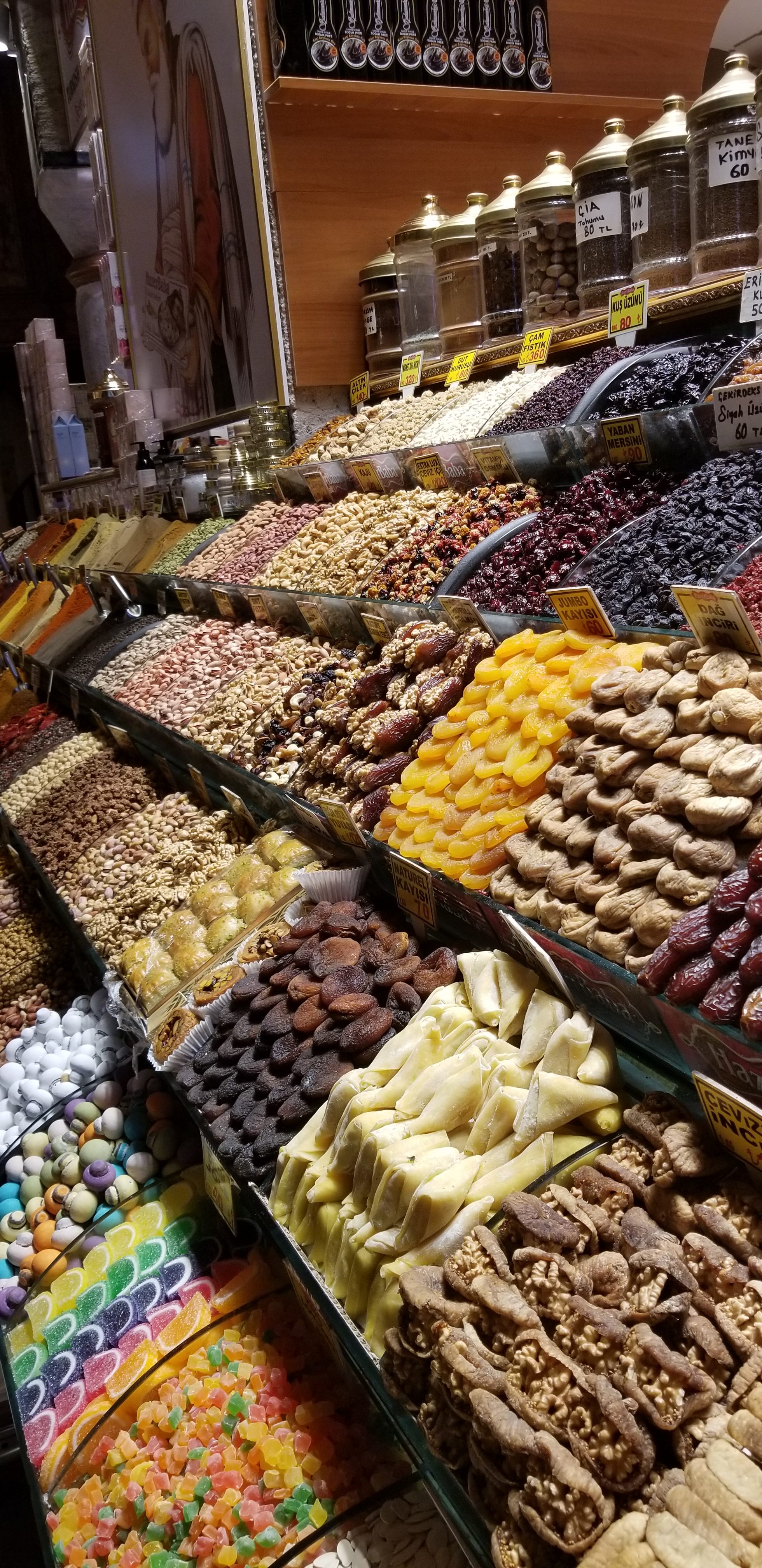
Construction of the Grand Bazaar began in 1455 by Mehmet II, aka Mehmet the Conqueror, as part of a broader initiative to stimulate economic prosperity in Istanbul. Now it has 61 covered streets and over 4,000 shops. The bazaar is divided into various sections, each specializing in specific types of goods, from jewelry and textiles to ceramics and spices, and … everything else. Navigating the labyrinthine alleys is part of the adventure.

The vendors would often call out to us as we passed. I heard “we have everything here but customers” and “how can I take your money?”

In the Grand Bazaar this dog skin had cheese in it. Go figure.

The Suleymaniye Mosque is the most beautiful in the city – fully restored. Photos can’t capture it properly.


Not all of the mosques are old. Here is a new one under construction.

We visited St. Antoine Catholic Church and admired its Gothic architecture. While the mosques tower over the city, Christian churches weren’t allowed in the Ottoman Empire until it fell in the 20th century, so they seem hidden away.

The second oldest subway in the world, after the one in London, was built here in 1875. Called “the tunnel”, it helped us get around the city.

Burcu, originally from Troy, was an excellent guide.

We passed by a vinyl record shop. Notice the album titles, Brenda.
Here’s how they serve ice cream in Istanbul.

Constantine’s column, constructed in 330 AD, is one of the oldest artifacts left in the city. Originally, it stood on a pedestal with five steps, but there’s not much left of it. Iron hoops have been added to stabilize the shaft. This seems to have happened after an earthquake in 416. The statue, which represented Constantine as Sol Invictus, fell to the ground in 1106; later, a cross was put on top of the column, but it was removed when the Ottoman Turks conquered Constantinople in 1453. A fire in 1779 damaged the monument even more. Nevertheless, it has recently been restored and is still standing.

We visited the train station at the eastern terminus of the Orient Express.

End of the line for the Orient Express.

A beautiful sunset appeared over the Golden Horn with a view of the Galata Tower in the distance.
Leave a Reply