

one of seven sister ships and we were “two ships passing in the night”.
People often come out of their houses as we pass by and wave Norwegian flags at us. So endearing!

There are 107 lighthouses in Norway. Lighthouses are needed because of the long hours of winter darkness and stormy conditions. All Norwegian lighthouses are red and white. Keepers used to live there, but now they are all automated. One keeper stayed for 24 years with two children. They had a private teacher. They would tether the children when they played outside due to wind and waves!!

The Gulf stream comes all the way from Mexico and keeps Norway’s water ice free. There was a great interest in WWII and now today for Russia and China to be able to transport oil, etc.
It is a Sunday morning and we have three hours to spend in Trondheim.


The most important church in Norway is located here where tradition says that St. Olaf is buried. Tourists are not allowed, but worshippers are encouraged to attend.


trading place.
Trondheim has the only cathedral in Norway. The original wooden church was built over the grave of St. Olaf, the patron saint of Norway.
It was once a Catholic Church, but after the Reformation it became the Church of Norway (Lutheran). Stonemasons had to learn the trade for five years before they could work on the church when it was rebuilt of stone.


Once back on the boat, I nodded off to a presentation on the Vikings. We don’t know much about them so I don’t think that I missed too much!!! Haha

Vikings were active from between 793-1066
In 793 they invaded a Monastery in England. They did not embrace Christianity. They had their own gods. Christian churches had loot.
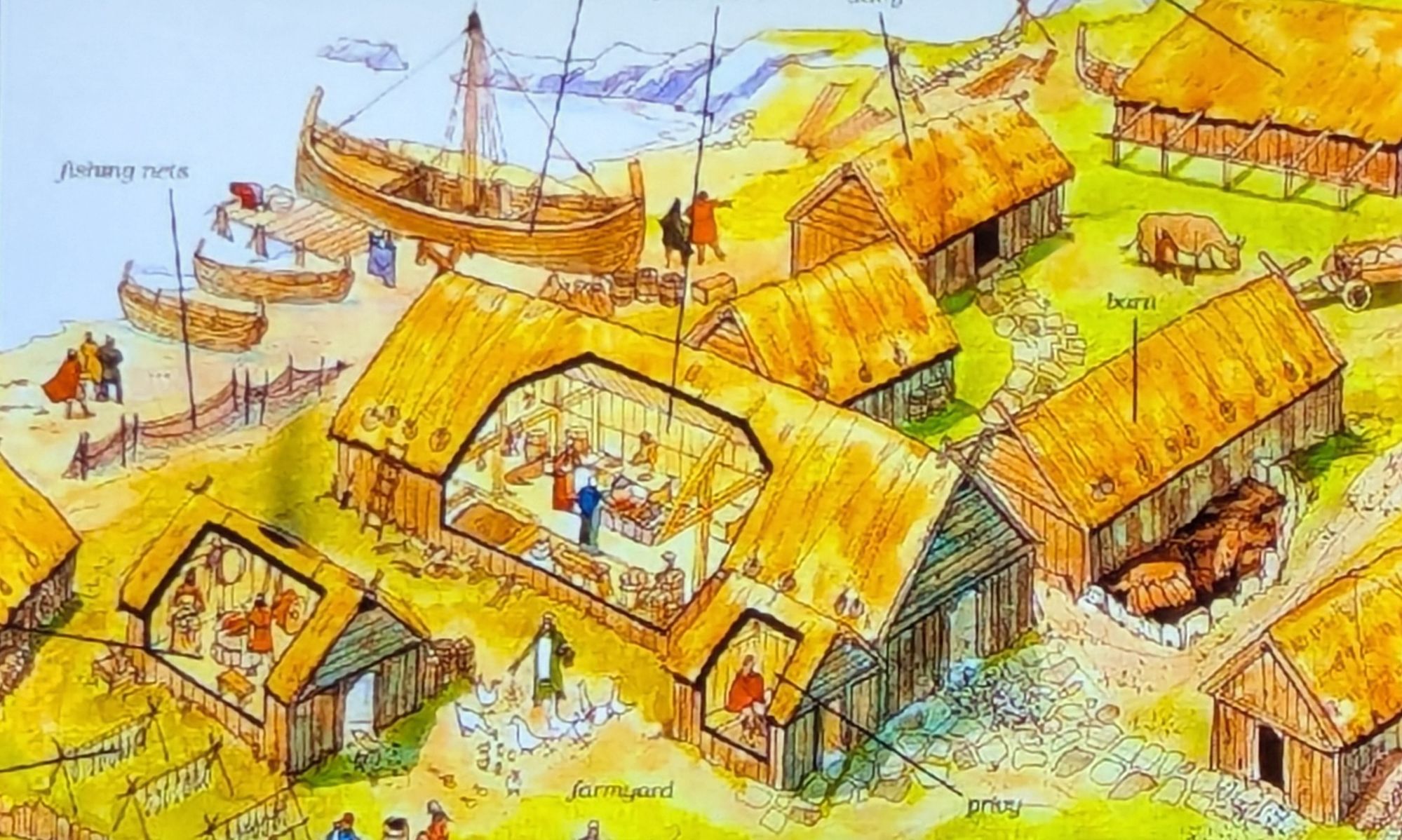
The Vikings were a Germanic culture that lived by the water. They lived in long houses that were big enough even for the livestock such as sheep and goats to provide heat. It was dark, damp, and cold, and they kept a fire burning.
The Vikings had boats because the sea was important. They did not go over the mountains. Waterways were easiest. They built fantastic ships. The building method was called clinker and had planks that overlapped. Also, the keel was flat in order to travel in shallow water. Signal fires were lit on these long boats.
Fighting, wrestling, archery, and swordsmanship were encouraged from childhood. Machismo and honor were important traits.
Vikings were pirates and lived by the sea. They were seeking adventures and new territories along with treasure. They melted and redesigned the metals that they stole to make neck rings.
Vikings would scream to intimidate and bang their shields. They used the long axe as a weapon. They did not respect anyone. They killed monks, weaklings, and the elderly. Women were incorporated into their clan.

One can read a first-hand account in 922 A.D. from an Arab chronicler named Ibn Fadlan. This 10th century account states that Vikings are strong, tall, and beautiful, but filthy. They would each wash their face with water in a bowl and then spit in it. The next one would do the same.
Gutenberg.org has over 75,000 free ebooks, and this is one of them.
The Battle of Stamford Bridge took place the month before the Battle of Hastings. The Vikings fought against King Harold of England. They thought that it would be an easy battle and didn’t wear their chain mail armor and were all killed off in 1066. The current King Charles of England is a descendant of William the Conqueror.
English words that came from the Vikings
- English Old Norse Meaning
- berserk berserkr “bear-shirt.”
- A Viking warrior who entered battle wearing nothing for armor but an animal skin.
- club klubba a heavy, blunt weapon
- gun gunn war & battle
- Originates from the female name Gunnhildr. Gunn and hildr translate to “war” and “battle.”
- ransack rannsaka to search a house
- scathe skaða to injure
- slaughter slatra to butcher

Josh Gates of Expedition Unknown did several programs about Vikings. This one is about the sunstone which is made from calcite and allows navigation even when it’s cloudy. These are found in Viking graves.
In Norway, the midnight sun can be seen during the summer months in regions north of the Arctic Circle, from late May to mid-July. The exact period varies depending on the location, with areas further north experiencing a longer period of midnight sun. For example, in Tromsø, it’s visible from approximately May 20th to July 22nd, the time that the sun never sets. In Svalbard, the midnight sun lasts from late April to late August. There is only one sunrise and sunset per year at the North Pole (and at the South Pole).
Now if we can stay up til midnight AND it is not cloudy.
Leave a Reply