As a microbiologist, I was interested in the Leprosy Museum. Gerhard Henrik Armauer Hansen who discovered the causative agent lived in Bergen. Sometimes leprosy is called Hansen’s Disease. Rob was a little reluctant, and there was a lot of hand washing!! Haha! Fortunately, it is likely only transmitted by direct respiratory contact.
Daniel Danielson had studied leprosy before Hansen and thought that it was hereditary. Because of this, at that time it wasn’t considered contagious. Yes, it often ran in families, but that was due to closeness and living conditions.
The discovery of the leprosy bacterium was a scientific breakthrough and was a prerequisite for definitively diagnosing, treating, and curing the disease.
The first exhibit talked about Dr. Hansen and his discovery. However, before he could see a microorganism, microscopes had to be invented and perfected.


Leprosy takes 3 to 7 years in order for symptoms to be noted. The longest has been 20 years. Those who contracted the disease had poor nutrition and a poor immune system.
Leprosy has a low mortality rate. People with leprosy died, but not because of leprosy.
Leprosy is broadly classified into two types based on the number of skin lesions and the presence or absence of bacteria: paucibacillary (PB) and multibacillary (MB) leprosy.
The multibacillary form is easy to spot and occurs on the face first. It can infect the ear, eye, and throat. The lesions are filled with 100 percent bacteria with the total weight of the lesions being as high as 4 pounds.
MB leprosy attacks the nerves. They stop feeling when they get day-to-day injuries. Many leprosy sufferers must have the body part removed that has been affected and then infected. In later stages, they can become blind and bedbound.
Once the contagion was discovered, there became a stigma associated with it. They did not have to yell “Unclean” like it says in the Bible but would ring a sheep’s bell so that people could stay away.
It is thought that perhaps the armies of Alexander the Great brought leprosy from Persia to Europe. Leprosy started in the Mediterranean then came North through Ireland and with the Vikings to Norway.
In the 1880’s leprosy laws called for those with leprosy to be institutionalized. People would travel far from their homes so that their families would not be stigmatized.
Leprosy is an old disease. It is mentioned in the Hindu holy text and was noted as occurring in the Indus valley. It was thought to be eradicated but still exists in countries such as India, Brazil, and Indonesia.
Armadillos are carriers of the bacteria that cause leprosy. The reason is unknown.


A workshop allowed residents to make and sell handicrafts in the market. The residents especially excelled at making wooden shoes. The shoes were better made and cheaper than the shoemakers in town. The shoemakers banded together to stop them from selling items in the local market. The residents also made nets, thread, and embroidered goods. Eventually, they were given an allowance to buy food, but it wasn’t very much.
The last patient was admitted in 1896 because the institution was built on old beliefs of isolating individuals for the greater good of society. The buildings were not removed, and those that were living here could remain until their death.
The last resident died in 1946. They died in this institution because they couldn’t reenter society due to the stigma of being a leper.
In 1950 a cure was found. Three antibiotics are taken in different doses over six months. Leprosy has not been eradicated, but there is now effective treatment that means the number of cases is constantly decreasing. The World Health Organization owns the patent on the cure, and it is free.
In WWII radios were stored here. The Nazis didn’t dare interfere with leprosy hospitals.


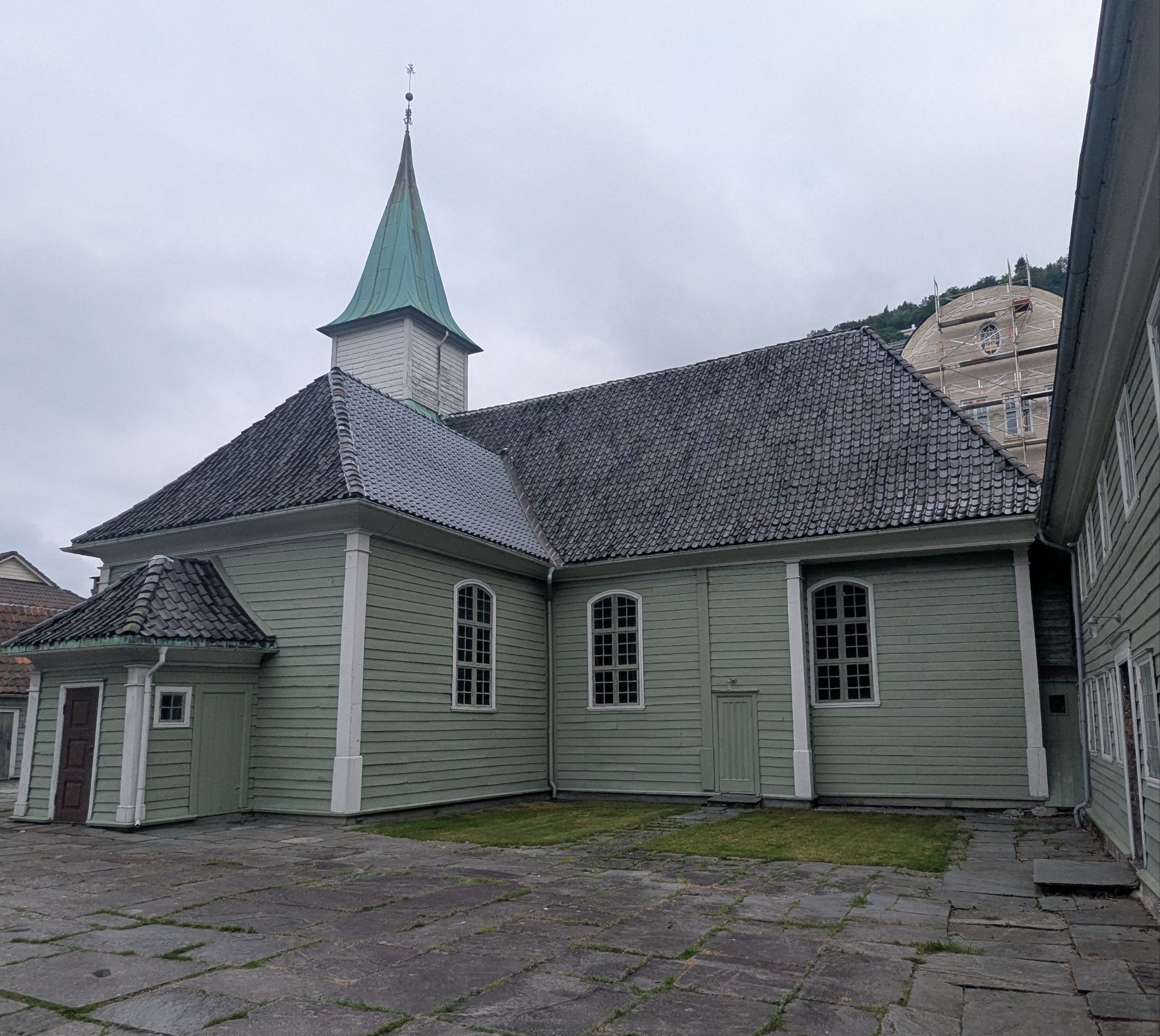
People from the community as well as the residents attended this church especially before 1873 when leprosy was thought to be hereditary. It is no longer functioning as a church but has been rented out for weddings!! Hmmm.
There were a lot of false positives back then such as people with psoriasis. Rob has psoriasis so he would have likely been misdiagnosed and sent to the leper house. And when it was considered hereditary, Rob would have then been castrated. Aren’t we glad that we know better today?? Rob, can I get an Amen??
That was a lot about leprosy! At least I spared you the museum pictures.


Leave a Reply