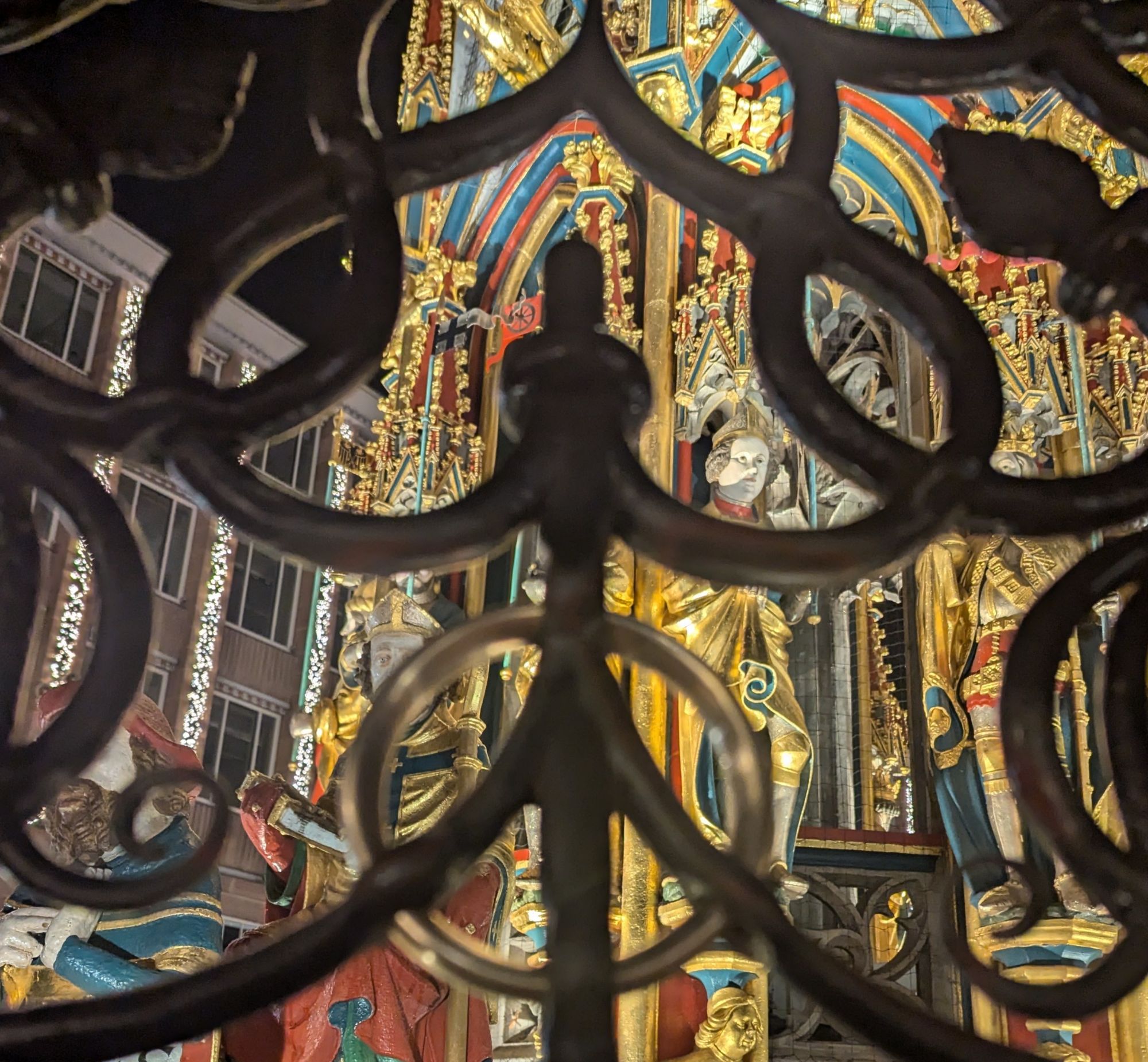
A word about Christmas markets:
The Nazis used Christmas markets as a tool to promote their ideology and consumerism by bringing back the Christmas markets to the center city in the 1930’s. Previously markets were banished from the city since ships complained that they were taking away business.
The Nazis used Christmas to reshape their traditions to fit their anti-capitalist or atheist leanings.
When the Berlin market moved to the city center, they were only allowed to sell Nazi-approved items, such as German-made ornaments, toys, and handicrafts and sanctioned German food such as bratwurst, herring gingerbread, and sugary confections.

The Nazi’s role in reshaping the Christmas markets was largely swept under the rug, even as many of the traditions they instituted remained. When Nuremberg’s market returned in 1948, so did the christkind. (However, the role would continue to be given to white actresses until 2019, when the selection of a biracial teenager prompted racist outrage from far-right politicians.)
Nuremberg, Germany
We are taking a Nuremberg city tour on a cute little red train.

In 1835 the first train ran in Nuremberg. People thought that this smoking monster was the work of the devil and that it would cause brain disorders or lung disease. The train traveled at 20 miles per hour.
Nuremberg is the Toy Capital of the World and has the largest toy fair in the world. There is a Museum of Toys featuring toys over 3,000 years.
Praying Hands is a famous drawing by Albrecht Dürer who studied art in Nuremberg. Read this heartwarming story about him and this drawing: Praying Hands
When you see a building with many dormers, it means that that building was originally for grain storage.


Metz, France


had made it to the manger.

During WWII, the Allies destroyed 90% of the Nuremberg. War crimes trials took place here due to the symbolic nature of Hitler’s gem, Nuremberg. Here is where he held his massive rallies. Triumph of the Will was a propaganda filmmade to showcase his influence. It was called Zeppelin Field since the first Zeppelin landed here in 1909.


Soldiers who ordered, perpetrated, or participated in war crimes or crimes against humanity were tried. Many soldiers who fit this description had already died in war. Survivors often conveniently said that the deceased were responsible.
On November 20, the trial began with 21 defendants appearing before the court.
The United States held 12 additional trials in Nuremberg after the initial International Military Tribunal. In all, 199 defendants were tried, 161 were convicted, and 37 were sentenced to death.

Jochaim Peiper and Josef Diefenthal who were responsible for cold blooded deaths in Bülligen and Malmedy were found guilty in a 1946 trial and sentenced to life in prison but were released after five years.


Leave a Reply