We wake each morning at 5:30am and have breakfast at 6:00 and leave at sunrise in the cool morning when the predators are active before they sleep during the heat of the day.
Lions

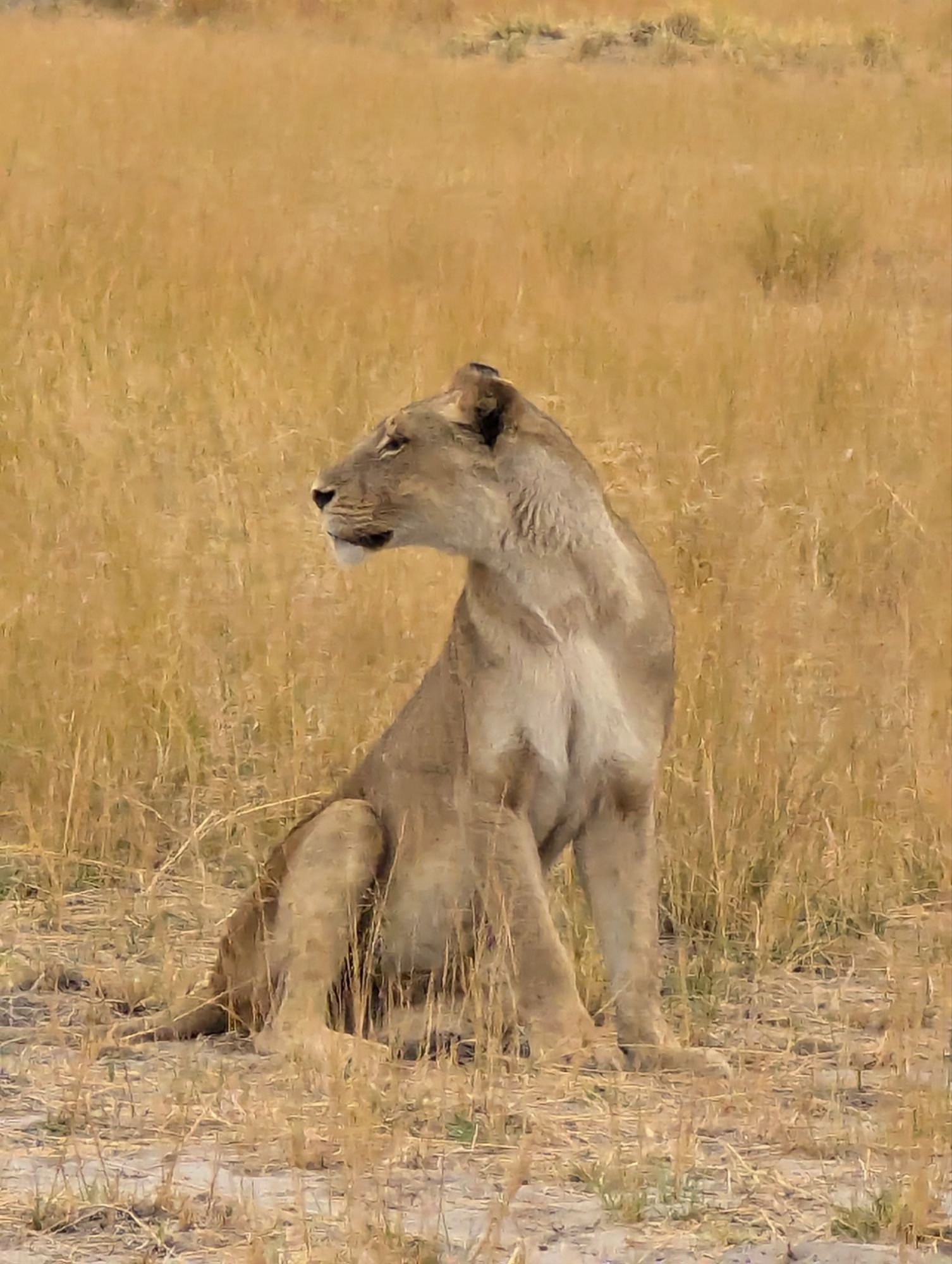
We came across three lionesses who were upwind from a meandering group of Cape Buffaloes. They were focusing in on any Cape Buffalo that strayed from the group.

We saw them in action but the lucky buffalo was able to kick her pursuer and thwart the attack. The success rate of a lion hunt is 30%.

It is the job of the males to patrol the area and provide security like soldiers. If other lions come into their territory, they will chase them out.
In males the mane gets darker and fuller as they get older. Males form a coalition and are mentored by the older males. Males will follow close behind the females who are hunting.


Lions are territorial. They eat fresh kill or scavenge. The lion suffocates its prey so it is a slow kill.
Brothers from the same family don’t fight each other. They protect the territory and submit to each other. On night patrol their job is to mark their territory and roar. When morning comes, they are exhausted and will sleep wherever.
Lions born in the camps have grown up with vehicles and regard them as part of the environment. Vehicles don’t affect the hunt. Sometimes lions use them for cover during the hunt.
Lions don’t hunt in the day because it affects their eyes and the bright sun causes them to miscalculate.
Cape Buffalo
Cape buffaloes are aggressive, unpredictable, and will charge without warning. One would not like to come across one on foot. They are a favorite of lions as it will feed the whole pride. However, they can easily put up a fight and gore the lion.
Near our tent in the Okavango Delta, a herd of cape buffalo came to sleep every night. We heard them splashing through the water hole after dark as they made their approach.
Cape buffalo come to the river for a mud bath.


Cape buffalo can live up to 18 to 27 years old. However, when the males are about 8 or 9 years old, they start to be pushed out by the 4 to 6 year olds. Then they form bachelor herds.
Although males and females have horns, the males have a larger horn that protrudes from his forehead called a boss for protection and for fighting other males.

We came across a large breeding herd of 150 head grazing on the dry grasses. Cape buffalo and zebra eat the grass at the same level. There is safety in numbers and they feel protected when they stick together. The herd will tighten up when feeling threatened. They are not as aggressive when in a herd. They feel more vulnerable and threatened when only one or two.
Leopards

Leopards are found all over Botswana, but the highest concentration of leopards can be found near Mokolwane. That does not mean that they are easy to find.
A favorite place for the leopard to hide and ambush unsuspecting impala is the Sausage Tree. Fruit bats pollinate the flowers. The flowers have about ¼ cup of nectar that even humans can enjoy as well as baboons, giraffes, elephants, and kudus. The favorite meal of the leopard is impalas.


Leopards have the longest life of the cats and live around 20 years which is longer than lions. Leopards have a small head, and the females are smaller than the males.

The leopard is not a runner. He is more of a surpriser. They don’t like open spaces and are very secretive. The tail moves a lot when interested in a hunt. He is constantly cleaning by licking his paws then rubbing his face.


The Honey Badger can lead one to a leopard. The tree squirrel, vervet monkey and Grey Goaway Lourie will be a clue that a leopard is near. Even the helmeted guinea fowl will screech out a warning. Leopards like to rest in the tree branches or in the shade of a bush.

Botswana Wildlife Documentaries
*means that it is filmed nearby.
- Big Cat Diaries
- *Big Cat 24/7
- *Living with Leopards
- Surviving Paradise – about the wet season


Leave a Reply